• About The Alternate Path

The Alternate Path

~ Thoughts on Walking the Path of Christian Discipleship

The Alternate Path

Author Archives: mcummins2172

The Transfiguration of our Lord: Extraordinary and Ordinary

20 Saturday Feb 2016

Posted by mcummins2172 in homily, Uncategorized

≈ 1 Comment

Tags

faith, hope, Lent, transfiguration, Transfiguration of Christ

transfiguration of Jesus1

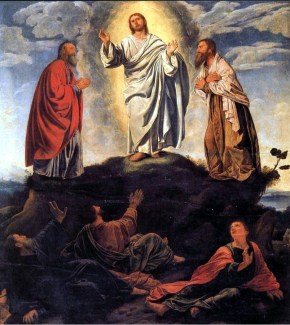
The Transfiguration of our Lord by Giovanni Girolamo Savoldo

We can say that Lent is an extraordinary time lived in an ordinary season. We fast, we pray, we do works of charity – all while we also go about the ordinary rhythm of our lives.  We still go to work, we still go to school, we visit with one another, we pay bills…  The ordinary rhythm of life continues on even while we make the extraordinary journey of Lent.

We have echoes of this “extraordinary in the ordinary” in our readings for this second Sunday of Lent. In the gospel (Lk. 9:28b-36) our Lord takes Peter, James and John up on the mountain to pray.  The three disciples experience the transfiguration of our Lord as he is in prayer to the Father.  They catch a glimpse of the truth of who Christ is and they are awestruck … but the world continues on.  The other nine disciples were probably about the duties of an ordinary day, for the people in the closest village it was just another day like any other.  The world did not stop even as this amazing event occurs.  Peter, understandably, wants to remain in this extraordinary experience but the gospel goes on to say that he “did not know what he was saying.” Our God does not disdain the ordinary.  For God the extraordinary and the ordinary are not opposed.

Just as Jesus took the three disciples up the mountain to pray, we are told that God “took Abram outside” to see and count the number of the stars (Gen. 15:5-12,17-18).  Our God values our company.  He does not like to walk alone.  Even with the surreal and mystical image of animals being sacrificed and Abram in a trance, God binds himself to an ordinary group of people, Abram’s descendants, in order to walk with them through the running of time and history and thereby bring them (and through them all of humanity) into the fullness of his Kingdom.  Christ himself values our ordinary company.  The gospels are consistent in this message.  Christ does not see himself as some tragic, solitary hero.  Christ binds himself to his ordinary, little group of followers even as he is fully aware of their weaknesses and their limits.

“Yes,” says the author of Philippians, “our citizenship is in heaven” and to this we direct our lives but we now live our lives here in this world so “stand firm in the Lord” (Phil. 3:17-4:1). Our actions here in our ordinary world and lives should reflect the extraordinary glory of our citizenship in heaven which is the hope we journey toward.

For God the extraordinary and the ordinary are not opposed. The same ought to be true for us.  We can be awakened, our eyes can be opened to see the extraordinary in the ordinary if we allow ourselves to be “taken up” by Christ.  Just as Christ took the three disciples up the mountain to pray, just as God took Abram outside to gaze at the heavens, we need to allow Christ to take us and pull us away from our own selfishness and draw us into his own life.  If we allow this to happen then we can participate in a greater reality, our eyes will be opened and we will begin to see as Christ sees.  We also can be transfigured.

It has been said that the transfiguration “means breaking boundaries. It means contemplating how good the Lord is, how wide his horizons are, and how deep the demands of his Gospel are.”  May each one of us be a little more transfigured during this extraordinary time lived in an ordinary season.

The witness of Eli: Mentoring Young People

24 Sunday Jan 2016

Posted by mcummins2172 in Uncategorized, young people

≈ 1 Comment

Tags

Eli and Samuel, faith, mentoring, Young Adult Ministry, younger generation and faith, Youth Ministry

hannah taking samuel to eli  222On January 31st, the Church will celebrate the Feast of St. John Bosco – a man who devoted his life to helping young people.  One of the greatest blessings of our Christian faith is the witness of men and women throughout history who let go of their own needs and worked tirelessly for the good of youth and those generations who were to come after them. The witness of these men and women should call us, as the Church, into a reflection on how best to minister to youth and young adults, especially in a time and culture that is “youth obsessed”.  We can readily see how this obsession plays itself out in all areas of society – the entertainment and news media industry, politics, sports, education, relationships – just to name a few.  A fair question is how might this “obsession with youth” bleed into and perhaps even negatively influence the Church’s own ministry to youth and young adults just as they are seeking to claim their own Christian faith and discipleship and how might we best avoid the danger of this obsession?
For full disclosure, I will begin by stating that one of the core convictions I gained in my ministry with youth and young adults is that young people do not benefit from older people trying to act or pretend young; rather young people benefit when their elders remember their own age and are authentic to who they, themselves, are.

To use an image from Scripture: in our world today, young Samuels need the guidance of older and wiser Elis.  For any person ministering to young people, 1 Samuel 2-3 is an important and essential point of reference.  There is much insight to be gained in continually returning to these chapters. Eli is one of the unsung heroes of Scripture.  For our purposes here, we will make use of the famous encounter between the young Samuel and the elder Eli as a way to explore some thoughts.

In the second chapter of 1 Samuel we are told that the Lord had withdrawn his favor from the house of the priest Eli due to the corrupt actions of his two sons, Hophni and Phinehas.  Yet the young Samuel “continued to grow both in stature and favor with the Lord and with men.” (1 Samuel 2:26)  In the third chapter we find the well-known scene of the young Samuel hearing the voice of the Lord, mistaking it for the voice of the old priest and going each time to the sleeping Eli until finally Eli catches on to what is happening and instructs the young man in how to respond.

Our focus here is more on Eli than Samuel.  There are four things that Eli does and personifies which are worthy of reflection and emulation.

  1. Eli has a relationship with the young Samuel while not pretending to be Samuel’s peer.
  2. Eli was a man of prayer who was able to eventually recognize what was occurring and then give good instruction to the young man.
  3. Eli put what was in Samuel’s best interest before his own.
  4. Eli trusted in God.

The fact that the young Samuel is comfortable in seeking out the elder Eli each time he hears the voice of the Lord testifies to an established relationship of trust between the two persons yet nowhere is there expressed any confusion between their differing roles.  Eli knows who he is and therefore he is comfortable in his own skin and he has no need to pretend to be something that he is not.  An approach to Christian faith and ministry that needs to abandon itself and our Christian heritage in order to chase after the world in the hopes of relevancy lacks maturity and therefore any real depth of insight to offer a young person who is searching.  It might be flashy in the moment but beyond that there is just really not that much there.

What enabled Eli to be comfortable in his own skin and act out of his own authenticity was that he was a man of prayer.  Like any true discipline, the fruit of prayer is only born after the establishment of a hard-fought for habit and practice.  Let’s be honest, the discipline of prayer is not easy. That which enabled Eli to finally recognize what was occurring with the young Samuel was a lifetime spent devoted to the often daily and mundane work of prayer.  An approach to Christian faith and prayer which seeks to manufacture “spiritual highs” at all times rather than developing the daily discipline of prayer is more about feeding addiction than honest Christian spirituality.  Such an approach is in fact a disservice.  The life of Christian faith grows gradually, often unnoticed and through daily habit.

Not only did Eli know what the Lord’s call meant for the young Samuel; he also knew what it meant for him and his family.  Frankly, God’s calling of Samuel meant the end of the road for Eli and his own sons.  It would not be out of place to believe that this recognition must have crossed Eli’s mind along with the temptation to intentionally misguide the youth in an attempt to watch out for his own sons.  Yet, Eli did no such thing.  Eli put Samuel’s best interest before his own and even that of his sons.  This will forever be in Eli’s favor.  To let go of self for the good of another person takes a mature and wise heart. Wisdom is sorely lacking in our world today and one way that this can sadly be seen is when members of an older generation cannot let go of their own interests, needs and particular viewpoints in deference to what is in the best interest of the younger generation.  When we let go of our own needs to help those who come after us then we make a choice for hope and a choice for the future.

I believe that one of the many contributing factors behind younger generations no longer defining themselves as religious is their own experience of their elders’ inability to put the needs of others before their own – the “elders” in this context being a generation of people who would more readily define themselves as “religious”.  When young people no longer define themselves as religious are they forsaking religion per se or are they reacting against impoverished examples of religion which they have seen?  True maturity is found in not always needing to put oneself first. True maturity is expressed in seeking the good of the other person.  It is this type of maturity that truly aids the next generation, as shown in this encounter between the elder Eli and the young Samuel.

What enables this letting go is a profound trust in God.  Eli had such a trust.  Following upon God’s revelation to Samuel; Eli requests that the young Samuel inform him of all that had been spoken by the Lord, holding nothing back.  Samuel shares all, including the ending of Eli’s house.  Eli responds, “It is the Lord, let him do what seems good to him.” (1 Samuel 3:18)  Eli’s trust in the Lord was perhaps one of his greatest gifts to the young Samuel.  A faith obsessed with pursuing youth and relevancy lacks this depth of trust because it is a depth that can only be achieved by negation and passing through the dark night of the senses.  At this point, everything Eli had been about was negated yet he is able to offer this profound statement of trust in the Lord.  In the end, the most important thing is that God’s will be done.

It does the Church no good to chase after the world.  Yes, we live in the world and there are truly positive things to be gained and we must seek to encounter and dialogue with the times we find ourselves in but it does no good if we are co-opted and lose our own soul in the process.  Eli has much to teach us about helping younger generations find and know God while, at the same time, remaining authentic to who we ourselves are.

The Wedding at Cana: Heart speaks to Heart

16 Saturday Jan 2016

Posted by mcummins2172 in homily, Uncategorized

≈ Leave a comment

Tags

disciple, discipleship, faith, Heart speaks to Heart, Wedding at Cana

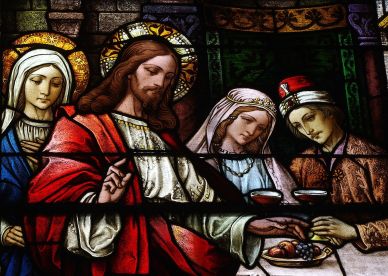
The-wedding-at-Cana.3There is much worthy of reflecting upon in today’s gospel (Jn. 2:1-11) which gives the account of our Lord’s first public miracle – the turning of water into wine and the wedding in Cana. We can see in the image of the couple running out of wine on their wedding day a symbol of the ending of the Old Covenant and the freshness of the New Covenant beginning with our Lord turning water into wine.  We can see in Mary’s noticing of the wine running short a concern for the young (and probably poor) couple who will soon be greatly embarrassed by not being able to provide for their guests.  The first step of true mercy is noticing needs and not being indifferent toward others in their plight.  This is a good witness Mary gives us during this Year of Mercy.
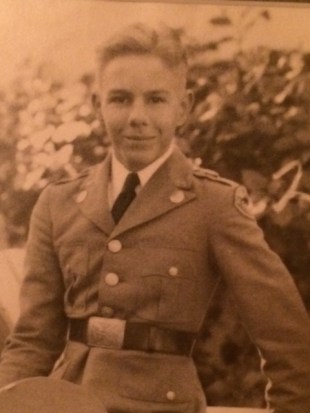
What I was struck by in praying over this gospel passage was the depth of the relationship (and this word is important) between Jesus and his mother.  Mary does not even need to ask.  She knows her son and even if she does not know fully how everything will play out she knows who he is and why he has come. “They have no wine,” is all that she needs to say.  Our Lord knows what she is implying, “Woman, how does your concern affect me? My hour has not yet come.”  Our Lord acknowledges the truth of Mary’s concern and for a brief instant we are invited into this amazing and profound exchange between the sacred heart of Christ and the immaculate heart of Mary.  Bl. John Henry Cardinal Newman had a phrase regarding the true place and moment of encounter and conversion in life: “Heart speaks to Heart”. “Fill the jars with water,” Mary responds.  Jesus, who is God made man, acquiesces; “Draw some out now and take it to the headwaiter.” The water is turned into wine which nourishes and refreshes!

Heart can only speak to heart in the willingness to enter into relationship. New life (and even miracles) can occur only when we let go of isolation and fear.

When St. Francis began the great spiritual journey of his life he made a simple prayer to God for an “honest faith”. Part of having an “honest faith” is to live a personal relationship with Christ.  We can relate to Christ in a multitude of ways but that does not make them fully honest and therefore life-giving.  I can see Christ as a great human being worthy of admiration or a wise teacher whose lessons are worthy of my attention and learning.  I can see Christ as the authentic human person.  I can see Christ as a means to my personal well-being.  There might be some truth to these viewpoints of Christ but they all fall short both of honest relationship and of who Christ is.

Christ is savior. This is the honest faith of the Christian and it is the most profound relationship any of us can have with Christ.  When we know Christ as savior then we know him as the one who saves us from sin and death and the one who calls us to follow him wholeheartedly.  Christ is savior and this is truth – pure and simple.

Faith can be life giving and even transformative only when it is lived in relationship with Christ. Ideas of Christ might be interesting and even satisfy for a time but it is only relationship with Christ that turns water into wine.  Mary witnesses this for us.  Heart speaks to heart.

We should all learn from St. Francis and pray for an “honest faith” – a faith willing to let heart speak to heart. Our hearts to the heart of our Savior and his sacred heart to our little hearts.

Gifts from my parents: a reflection in faith

06 Wednesday Jan 2016

Posted by mcummins2172 in Uncategorized

≈ 2 Comments

Tags

faith, family, The illative sense

What is it that leads people into the Catholic Church? I recently found myself reflecting on this question as I visited the gravesites of my parents, both of whom were converts.  I do not have a neat, black and white answer and I don’t remember my parents ever giving one either.  It is interesting how parents can remain a mystery to their children.  A mystery that only deepens after the parent dies and the children are left with jigsaw puzzle memories.

My parents lived their Catholic faith although I think both would admit their struggles. My father was an alcoholic – a disease which he would never overcome that took his life and his marriage.  My mother, for the good of her boys, finally separated from my father but such a disruption is never perfect nor good.  Faith-wise, my family was thrown into limbo for most of my childhood and teenage years.  At best we were twice a year Catholics, lost and confused – reeling from the effects of the modern, shattered family.

IMG_3887My father was brought up in a Presbyterian household although how staunch it was is open for debate. A story I once heard was of an exchange which occurred sometime after my father’s conversion when my two great aunts from Mississippi made a visit to my grandfather and grandmother.  Noticing a little dust on the family Bible one aunt is said to have remarked, “Maybe if that Bible was not dusty, Jack would never have converted.”  A number of years later my own aunt (my father’s sister) would tell these same two great-aunts, “Michael has decided to enter Catholic seminary and we are very proud.”  The southern equivalent of drawing a line in the sand!

My grandfather was a self-made and successful businessman who established a local business and, at some point, acquired a bottling company in Cuba. This was pre-Castro when Cuba was open and, apparently, quite the place to be.  Every now and then my father would share memories of being a young boy visiting Cuba and he would smile when he talked of visiting some Catholic churches and shrines in the country.  Even to the end of his life my father enjoyed spending whole evenings sitting and listening to records of Cuban music.  I cannot help but believe that the lived faith my father witnessed in Cuba as a young man lit a spark that eventually led him to embrace Catholicism.

IMG_3889My mother did not grow up in affluence as my father did. Her childhood was spent in a small town in North Carolina.  Nominally, I believe that she was raised Baptist but it seems that church was not a major factor in her younger years.  She did once tell me that for a while she worked at a local Methodist retreat center frequented by the young (and then single) Billy Graham.  “All the young ladies would swoon over him,” my mom once confided.  She never said if she was one of the ones swooning.  Right out of high school my mother left Brevard to work in book-keeping for a man who owned a number of hotels scattered around the southeast.  Mr. Faw was a good man.  He looked like Colonel Sanders, the founder of Kentucky Fried Chicken, and for the fun of it would sometimes dress like the fast food icon just to see people’s reaction.  Mrs. Faw was of Eastern European descent and she once gave my mother an eighteenth century lithograph of the Virgin Mary holding the infant Jesus.  My mother treasured this gift and today it hangs on my wall.

IMG_3888At one point (prior to marrying my father) my mother was sent to a hotel owned by Mr. Faw in Oak Ridge, TN. At that time it was the only hotel in the city and therefore the temporary residence of visiting scientists from all over the world who came to do work and research in the government-run laboratories.  My mother met a wide variety of people those years and at one point was approached by the FBI to help keep tabs on a visiting couple that the government thought had Russian connections.  For this effort my mother received a signed letter from J. Edgar Hoover thanking her for her service to her country.   One scientist my mother met and became a good friend of was a Franciscan nun from the Northeast.  She taught at a university and had come to Oak Ridge to do some research.  She and my mother remained friends for many years and I do believe that her friendship and that of Mr. and Mrs. Faw were what helped my mother in recognizing the beauty of the Catholic faith which, in turn, enabled her to make the choice to become Catholic.

When I was studying theology I took a class on the thought of Bl. John Henry Cardinal Newman. It was in that class that I first heard the term, “The Illative Sense”.  Fundamentally, the illative sense in regards to faith, is that capacity that the human person has to draw from a multitude of converging and intersecting common human experiences the belief and sure conviction that there is a transcendent dimension to reality and that there is a personal God who seeks encounter with us.  One experience alone is not enough but when the experiences add up we have the ability to connect the dots.  The illative sense is not so much an academic exercise (although that might be an essential component) as it is a fundamental living recognition of experience.  Things just kind of add up and it is in this “adding up” that a person is able to make the step in faith.

2014-06-14_22-38-52_408My father and mother each walked their own journey of life and of faith (like we all do) but through their journeys and their own reflecting on experiences (i.e. use of the illative sense) they both came to belief in God and in the Church. I do not know all the experiences that added up to their each making their choice for faith.  I never will and that is probably for the best.  There are some things rightly left between the soul and God alone.  These are and will remain the missing jigsaw pieces of their own journeys but I must admit that I do take great delight when I hear a story or memory shared that sheds a little more light on the journey each one had.  These insights bring me joy and, I believe, are gifts given to help us who remain to continue our own journeys of life and faith.

The Feast of the Epiphany: following bees and following the star

02 Saturday Jan 2016

Posted by mcummins2172 in Epiphany, Uncategorized

≈ 2 Comments

Tags

belief, Epiphany, faith, homily, hope, Star of Bethlehem

beeSome of the best advice I ever came across regarding homily preparation was in an essay written by Annie Dillard. In the essay Dillard made use of the imagery of following bees as a way of exploring the adventure of writing.  If you want to find a bee hive (and honey) then follow a bee.  If you lose sight of the first bee then wait and when you catch sight of another bee follow it.  By so doing you will eventually be led to the bee hive.  The same is true for writing.  When an idea or thought, no matter how strange or non-sensical it seems at the outset, pops in your head then follow it.  Let the thought lead you even if you do not know exactly where it is going.  It may take you to where you want to go.  If it takes you only so far then stay there and wait for the next thought.
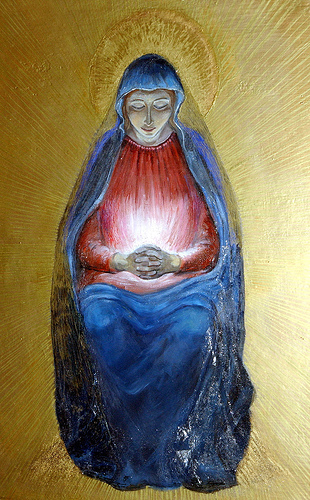
When I begin to pray over the readings I try to pay attention to what “pops” for me. It might be an image or a phrase or a play of words.  Then I try to let that lead me.  It may take me all the way to where I want to go or it may not.  It may take me only so far.  It may take me to another thought (sometimes one which I was not even expecting) or a book I once read, or a movie scene or a song lyric or a memory.  There are many times that I sit down to write out a homily following that first “pop” that I really have no idea where I am ultimately going or I end up in a spot I did not think I would end up at.

Following bees takes patience, trust and faith. Following a star also takes patience, trust and faith.  But certainly there is a difference.  A bee is a small thing, easily overlooked and lost, and the star of Bethlehem must have shown bright for all to see.  The gospel (Mt. 2:1-12) tells us that the magi from the East recognized the star but it seems that all of Jerusalem was oblivious.  Herod, after all, had to ascertain from the magi the time of the star’s appearance.  Apparently, the star had not really made much of an impression upon Jerusalem.  Maybe the star of Bethlehem was not as bright and overpowering as we so often assume from Christmas imagery?  Maybe it takes more faith, more trust and more patience to follow a smaller star than a larger and brighter one?  Yet the magi followed.  They raised their eyes to the heavens and saw the star and they followed.

In the first reading (Is. 60:1-6) we hear the prophet Isaiah admonishing Jerusalem to rise up! Yes, darkness covers the earth and there are thick clouds that envelop the people but the light has come! “Raise your eyes and look about,” proclaims the prophet.  Yes the light has come but for our part we must raise our eyes.  We can almost say that Jerusalem was content to be oblivious and to be oblivious means to keep our eyes down and not even dream of raising them.  To be oblivious means to give in to the darkness of sin and violence and the thick clouds of resignation that tell us that this is just the way things have always been and will always be.

In the Epiphany we are no longer afforded the luxury of remaining oblivious. The light of God has appeared for all nations, for all peoples and for all times!  As Christians we must learn the discipline of the magi.  We must raise our eyes and look about!  We have to learn the faith, the trust and the patience needed to follow the star.  We have to be willing to let our faith lead us even when do not fully know where it is going.  We have to learn to follow even the smallest stars that point us toward God and his Kingdom.  And we have to resist, in every way, the voices of resignation – the thick clouds that can cover the earth and cover our hearts.

As Christians, we celebrate the Epiphany – the light of Christ has dawned for all peoples and nations. As Christians, we must be the Epiphany.  Our very lives must reveal the light of Christ in our world.  We begin to do this by making the choice to raise our eyes, to look about and to follow the star of God’s Kingdom.

Mary’s witness: Fourth Sunday of Advent (C)

19 Saturday Dec 2015

Posted by mcummins2172 in Uncategorized

≈ Leave a comment

Tags

Advent, Christian life, faith, God's promise, hope, Virgin Mary

maryTwo things struck me as I prayed over the gospel this past week. The first is when Luke tells us that Mary entered the house of Zechariah and greeted Elizabeth.  I found myself returning again and again to that scene in my imagination.  How joy-filled it must have been!  Mary stepping into this house which for too long had been barren of the sound of new life, the sound of children.  Elizabeth said that the child in her womb leapt for joy at the sound of Mary’s greeting – a confirmation of what the angel had promised Zechariah.  What was thought barren will now bring forth life and it will be a life that, in turn, will proclaim the coming of the Messiah!  For nothing is impossible to God.

Mary comes to Zechariah and Elizabeth not as we are, weakened and wounded by sin, rather she comes as God would have us. On December 8th we affirmed that Mary is the Immaculate Conception.  In a great mystery she is preserved from sin.  In Mary we see not the exception but in fact the true norm – the human condition as God intends.  Mary reveals our true nature and dignity where sin obscures, denigrates and denies.  The very presence of Mary reveals that sin and evil are, in fact, the exception and will always be so.  Sin and evil have no true power.  Sin and evil can destroy and tear down life but they can never bring forth new life.  God alone is the author of life.

Mary is the true missionary of hope and Mary stands as the great witness to the impotence of evil.

The second thing that struck me is when Elizabeth proclaims Mary “blessed” because she believed that what the Lord had spoken to her would be fulfilled. Someone recently asked me if Mary could have said “no” to the angel Gabriel and refuse God’s request.  Mary certainly had free will in that moment and it was a free will untainted by original sin.  Mary chose to believe.  Despite all things to the contrary – the darkness and violence of the world, the confusion of what the angel’s words meant, the scandal that would be in the eyes and thoughts of people – Mary chose to believe that what God had spoken to her would be fulfilled.

This last Sunday of Advent, standing before the celebration of Christmas, Mary witnesses to us the true impotence of evil and that God alone is the author of life. Mary also witnesses to us the choice to believe that what God has promised God will fulfill.  We need to live the hope of this season and we need to learn from Mary how to be missionaries and witnesses of hope.

Recently Archbishop Joseph Kurtz (current president of the U.S. Conference of Bishops) shared the following words in a statement regarding the violent times we find ourselves in and how we are to respond as Christians.

We must not respond in fear. We are called to be heralds of hope and prophetic voices against senseless violence, a violence which can never be justified by invoking the name of God. Watching innocent lives taken and wondering whether the violence will reach our own families rightly stirs our deepest protective emotions. We must resist the hatred and suspicion that leads to policies of discrimination. Instead, we must channel our emotions of concern and protection, born in love, into a vibrant witness to the dignity of every person. We should employ immigration laws that are humane and keep us safe, but should never target specific classes of persons based on religion. When we fail to see the difference between our enemies and people of good will, we lose a part of who we are as people of faith. Policies of fear and inflammatory rhetoric will only offer extremists fertile soil and pave the way toward a divisive, fearful future. As Pope Francis reminded us in his speech to Congress: “The yardstick by which we measure others is the yardstick by which time will measure us.”  

When we recognize the impotence of evil, we stand with Mary. When we make the choice to not give in to fear and to believe that what God has promised God will fulfill then we stand with Mary.

Come, Lord Jesus!

Advent: Return to the Beginning

05 Saturday Dec 2015

Posted by mcummins2172 in Advent, hope, Uncategorized, Year of Mercy

≈ 1 Comment

Tags

Advent, hope, Mass shooting, sad logic of violence, Year of Mercy

advent wreath 3The week before the first Sunday of Advent I ventured into a local craft store in search of Advent candles.  After inquiry, a sales associate led me to the candles.  We passed one, then two, then three, four and five full aisles of Christmas decorations.  Arriving at the last row she pointed to a small stack of Advent candles on the bottom corner of a shelf.  Quite sad in comparison.  I cannot help but reflect on the symbolism.  As I write this reflection there has been yet another mass shooting in our country.  I do not make this jump from searching for Advent candles to a mass shooting in order to be flippant or sensational, I share it because I believe Advent offers needed lessons for our world today but honestly I fear these lessons may fall on deaf ears because they will require work, sacrifice and even risk on our part.

One of the virtues that Romano Guardini explores in his book Learning the Virtues that Lead You to God is the virtue of patience.  In the course of his reflection he offers these words:

Therefore patience, which always begins again, is a prerequisite if something is to be done.  In “The Imitation of Christ” we find the phrase “Semper incipe!” … At first sight, it is a paradox, for a beginning is a beginning and then we go on.  But that is true only in mechanical matters.  In actual life, beginning is an element that must operate constantly.  Nothing goes on if it does not at the same time begin. 

So he who wishes to advance must always begin again.  He must constantly immerse himself in the inner source of life and arise therefrom in new freedom, in initiative – the power of beginning – in order to make real what he has purposed: prudence, temperance, self-control, or whatever it may be that is to be accomplished.  

Patience with oneself – not carelessness or weakness, of course, but the sense of reality – is the foundation of all progress.  

The wisdom that Guardini offers here is a wisdom found at the heart of the season of Advent.  In Advent, we as Church, “begin again”.  We return to the beginning and we join with the saints of this season (Ss. John the Baptist, Elizabeth, Zechariah, Joseph and Mary) in awaiting the coming of the Messiah.

Advent calls us to honestly acknowledge the darkness and brokenness of our world and our lives not in order to shut down in despair but in order to open a window of hope.  If approached correctly and not rushed through, the season of Advent offers profound lessons to help us learn patience with ourselves and our world.  We recognize that there is something fundamentally broken within ourselves and the human condition that is just not possible for us to heal and fix.  It is too mysterious, too deep and too painful.  Further, we recognize how all of creation stands in need.  We come to learn that the ultimate answer cannot be found in us.  Yet, we also recognize that there is a deep yearning for wholeness within and, if we sit with it long enough, we recognize that this yearning itself has been planted within us by God.  It is part of our makeup, part of the essence of who we are and Scripture tells us that God is a God who does not disappoint.  God will answer our need.  God will answer the deepest need of our world with the coming of Christ in glory in the fullness of all history.  God has answered the hope of the ages with the incarnation of the Son!

“Semper incipe!” is a spiritual truth and we learn it from the Advent saints themselves.  Zechariah and Elizabeth began again when they were reminded that nothing is impossible for God.  Joseph began again when he was reminded that God will act as God so chooses and our job is to trust.  John the Baptist began again when he went into the wilderness to meet the Lord just as the people of Israel had encountered God during their forty years of wandering in the desert.  Mary began again in her profound “Yes” to God – the heart of Israel’s history and hope.

We live in a dark time.  There is much violence, isolation, pain and fear in our world today.  In such times patience is called for all the more.  We must overcome the temptation to rush to judgment, to rush to condemnation, to rush to separation, to rush to retribution.  Patience rightly lived is a needed antidote rather than a weakness.  If we are to move beyond the darkness of these times we can neither naively try to wish it away nor pretend the darkness does not exist, rather we need to be honest about the state of things and then get to work!  And as Guardini rightly notes, patience is the foundation of all true progress.  The saints of Advent were anything but naïve.  They knew the brokenness of their world and their own need and they clearly show the willingness to begin again.

This particular Advent, this season when we as Church return to the beginning, should be different.  This celebration of Advent which marks the beginning of the Jubilee Year of Mercy ought to initiate a transformation in us as Church that will affect our world.  In this will Advent truly be authentic.  No longer can Advent just be my or our personal preparation for the celebration of Christmas, rather Advent must light hope and mercy for our world.  We need to live the anticipation of this Advent not for ourselves but truly for all of our sisters and brothers – especially those who are suffering and forgotten.

Our world is in a dark place.  There is work that needs to be done.  Before we rush to the work, we should return to the beginning and immerse ourselves in that inner source of life which is our faith in the work of God himself.  Patience is the foundation of all true progress.

I would suggest that in a particular way this Advent we stand with the saints of this season and we learn from them how to return to the beginning.  This lesson is too important; too critical to the times we now live in, to bypass.

When all is said and done we may very well recognize that human history was carried neither by the proud nor the arrogant nor the centers of our world’s powers but rather by the patient – the ones who learned how to continually return to the beginning in order to arise in new freedom and new awareness.

The Humble and Patient King

21 Saturday Nov 2015

Posted by mcummins2172 in Christ, Christ the King, Christian living, Feast of Christ the King, holiness, homily, humility, Uncategorized

≈ 2 Comments

Tags

Christ, Christian life, faith, Feast of Christ the King, humility

jesus before pilateAt one point in his commentary on this Sunday’s Responsorial Psalm (Ps. 93), St. Augustine shares this observation: Humble people are like rock.  Rock is something you look down on, but it is solid.  What about the proud?  They are like smoke; they may be rising high, but they vanish as they rise. 

In the gospel for today’s Feast of Christ the King (Jn. 18:33b-37) we are given the humble and patient God.  Pilate (representative of all the powers of the world but powers that really have no authority of Jesus) questions Christ – a seemingly defeated and isolated man, abandoned by his friends and followers and mocked by his own people.

Pilate answered, “I am not a Jew, am I?  Your own nation and chief priests handed you over to me.  What have you done?”  Jesus answered, “My kingdom does not belong to this world.  If my kingdom did belong to this world, my attendants would be fighting to keep me from being handed over to the Jews.  But as it is, my kingdom is not here.”  So Pilate said to him, “Then you are a king?”  Jesus answered, “You say I am a king.  For this I was born and for this I came into the world, to testify to the truth.  Everyone who belongs to the truth listens to my voice.”  

Today, we as Church, proclaim Christ is King yet, like Pilate, our understanding and idea of this title is often limited.  It is interesting to note on this Feast of Christ the King that our Lord, himself, never took on the title of “king”.  Even on this most final and bitter of stages; when the fallen pride of our human condition would eagerly grasp onto a title of assertion to throw back into the face of the powers of this world (how often we see this exalted on our movie screens in the myth of redemptive violence) our Lord chooses a different path.  “You say I am king.  For this I was born and for this I came into the world, to testify to the truth.  Everyone who belongs to the truth listens to my voice.”

Our Lord rejects the title “king” and by so doing he forswears the fallen world and all it has to offer – self-indulgent pride, sad divisions and triumphalism and all forms of violence.  Our Lord chooses a different path – the path of humility.  “For this I was born and for this I came into the world, to testify to the truth.  Everyone who belongs to the truth listens to my voice.”  

Humility has more in common with truth than does pride and power.  In fact, humility is essential if there is to be any real understanding of truth.  If we would know the truth then any temptation to put ourselves and our way of thinking at the center of creation (and these temptations come in all shapes and sizes: blue and red state, enlightened secularist and righteous religious, male and female, rich and poor, all colors of skin and shades of culture) must be put aside.  Everyone (I repeat “everyone”), needs to accept the purifying light of humility because the only constant, the only necessary is God – all else is contingent upon God’s will.  We are not necessary.  The more we realize this then the more we open ourselves to those moments when we catch a glimmer that God is indeed the “rock”, the only solid basis of all creation.  We also catch a glimpse of the infinite patience of God who submitted Himself to our illusions and misguided hatred.  Gratitude grows in our hearts when we honestly acknowledge and reflect upon the humility and patience of God.

Ours is a different type of king.  All is grace.

Do you want joy and gratitude?  Then look to the one we proclaim “king” yet who never sought that title for himself.  “For this I was born and for this I came into the world, to testify to the truth.  Everyone who belongs to the truth listens to my voice.”  Cultivate humility.  Humility leads us to truth and truth brings gratitude.

The coming of the Son of Man. We are not Afraid. (Thoughts on the Sunday readings: 33rd Sunday in Ordinary Time – B.)

15 Sunday Nov 2015

Posted by mcummins2172 in Christ, homily, hope

≈ 1 Comment

Tags

apocalypse, hope, Second Coming, Son of Man, terrorist attacks in Paris

new_jerusalem1One of my professors in seminary would often remark that the events of the last days as portrayed in the Scriptures should be read like the labor pangs of birth rather than cataclysmic destruction.  In fact, the birth analogy is more in keeping with the fuller sense of Scripture than any “cataclysmic, world destroyed in a ravaging ball of fire, Hollywood movie” version.

The texts of Scripture do not confirm a sort of “theory of catastrophes,” according to which there must first be a complete destruction of the world after which God can finally turn everything to good.  No, God does not arrive at the end, when all is lost.  He does not disown his own creation.  In the book of Revelation we read, “You created all things, and by your will they existed and were created” (4:11). We must also remember that at the very beginning of Scripture, after God has made everything, God looks upon creation and proclaims it to be good. God does not disown his creation.

The “upheaval” expressed throughout the New Testament is that when the Son of Man comes, he comes not in the weariness of our habits nor does he insert himself passively into the natural course of things.  When Christ comes, he brings a radical change to the lives of men and women and it is always a change that brings the fullness of life.

Notice that in this Sunday’s gospel passage (Mk. 13:24-32) after our Lord speaks of the coming of the Son of Man with “great power” he goes on to state: Learn a lesson from the fig tree.  When its branch becomes tender and sprouts leaves, you know that summer is near.  In the same way, when you see these things happening, know that he is near, at the gates. 

Our Lord does enter into our lives and the life of our world with “great power” but the upheaval he brings is an invitation to turn away from sin and the works of sin and to turn toward the fullness of life.

As Christians we are to live in this world not bound by the deadening works of sin and pride but rather in the upheaval and pangs of birth of the establishment of the Kingdom of God.  Because every day and in every situation Christ is near, at the gates.  The Book of Revelation gives us an image of this hope toward which we yearn and work.  Then I saw a new heaven and a new earth … And I saw the holy city, the new Jerusalem, coming down out of heaven from God, prepared as a bride adorned for her husband (Rev. 21:1-2).

The great “Day of the Lord” is not yet to happen. It has already happened!  God has entered into creation and history in the person of Christ, eternity has entered into time, and now this upheaval comes to every generation and even each day!  We are caught up in the great work of God where all peoples and nations will be gathered together into the new Jerusalem!

The “end of the world” must come every day.  Every day, we must put an end to both the small or big pieces of the world’s evil and malevolence … Scripture invites us to keep the future, toward which we are led, in front of our eyes: the end of the world is not a catastrophe, but will in fact establish the holy city that comes down from heaven.  It is a city that is a concrete reality, not an abstract one, gathering all the people around their Lord.  This is the goal (and, in a sense also, the end) of history.  But his holy city must begin in our daily life now so that it may grow and transform the lives of men and women into God’s likeness. 

Our thoughts and prayers this weekend turn to Paris and the victims of Friday’s terrorist attacks. One of the stated goals of ISIS is not just to bring about a caliphate (a Muslim state) but the apocalypse as they view it. They wish to bring about the apocalypse through acts of violence. Theirs is a sick and twisted ideology. Already the people of Paris are responding to these violent attacks by standing up and saying “We are not afraid.” This is a classic Christian response. We are not afraid because the coming day of the Lord is not a day of destruction but a day of life. The coming Day of the Lord will be when all injustice will be righted, every tear will be wiped away and life will reign! We are not afraid because God has entered into human history and has overcome violence and emptied the tomb of its power!

We are not afraid because Christ is Lord!

(Quotes taken from The Word of God Every Day by Vincenzo Paglia.)

The Feast of All Saints

31 Saturday Oct 2015

Posted by mcummins2172 in homily, hope, saints

≈ Leave a comment

Tags

All Saints, Beloved sons and daughters, Feast of All Saints, God as Father

All saints1Maybe it is just the time of the year but lately I have been thinking about people I have known in my life and the influence they have had on me. I can say that I have been blessed with having good people in my life. One such person was Billy. During the latter years of high school and into college I worked in the maintenance department of Appalachian Oil Company (Appco). This was the family business. It began as Cummins Oil Company (started by my grandfather) and grew to Appco. The company was located in Blountville and every morning the maintenance crews would meet there to get our jobs from our supervisor Mr. McCoy and then go throughout the Tri-Cities to the different gas stations and convenience stores we serviced.

Billy was a soft-spoken, down to earth man who spent his whole life working for the company. He walked with a limp but he was as strong as an ox and he knew how to fix just about everything. Billy was a born again Christian, he played in a gospel band, he didn’t put up with cussing or gossip and he always had the music in his maintenance truck tuned to a Christian station. I remember one of the things he used to often say was, “The only mistake you can make is not learning from a mistake.” For all these reasons, primarily the no cussing and no bad talk rule and the gospel music in the truck, the rest of the maintenance crew (who were not so devout) did not really care to be paired with Billy on maintenance runs. Strangely though, these things never bothered me … go figure … so often Mr. McCoy would assign me to work with Billy.

I remember one day we were driving to Mountain City to repair some gas pumps at a store and Billy shared his conversion story with me. Apparently, he had quite the wild life which was fun for a while but then quickly turned sour and he was seriously close to losing his wife, his family and his job. As we were driving along I remember Billy saying, “At that time I did not know who I was anymore.” He knew he had to change and that next Sunday he went to church and was, as he said, “born again”. And Billy lived it; it was not just a pat phrase for him.

This last week the priests of our diocese were together on retreat and, as you may expect on a priest retreat, there were very high theological discussions. At one point our retreat director (a priest from Brooklyn) shared a scene from that truly theological masterpiece – Disney’s “The Lion King”. It was the scene where the young Simba is lost and confused after the death of his father. He is led into the wilderness by the wise baboon and he has a vision of his father. In the vision the father challenges Simba and says, “You have forgotten who you are and so you have forgotten me … Remember who you are. You are my son!” Simba remembers and knows what he must do but he knows it will be hard to face his past. To this the wise baboon says, “Yes, the past can hurt … you can either run from it or learn from it.” (“The only mistake you can make is not learning from a mistake.”)

All Saints 1Today the Church celebrates the Feast of All Saints where we honor all those men and women (recognized by the Church or known only to God) who truly and authentically witnessed to Christ in their lives. In the First Letter of John we hear, “Beloved: see what love the Father has bestowed on us that we may be called the children of God. Yet so we are … we are God’s children now…” Whether they came to the realization early in their lives or late in their lives, all the saints share this common awareness: “…we are God’s children now…” By remembering who their Father is, they learned who they were. When we remember who our Father is, we learn who we are. Further, it is when we remember who our Father is and who we are that those moments/attitudes named by our Lord in the beatitudes become “blessed” – not just a moment to endure and get through but truly a source to deeper awareness and a path to the Father and the Kingdom.

Today we celebrate the saints – those publically recognized by the Church whom we should cultivate friendship with and those who are known only to God and perhaps to a few people who had the privilege to encounter them. The saints remind us of who our Father is and who we are meant to be. And they teach us that amazing truth that, yes, each of us are also called to be saints.

… we are God’s children now …

← Older posts
Newer posts →
Follow The Alternate Path on WordPress.com

Enter your email address to follow this blog and receive notifications of new posts by email.

Previous Posts

  • April 2026
  • March 2026
  • December 2025
  • November 2025
  • August 2025
  • April 2025
  • February 2025
  • January 2025
  • December 2024
  • August 2024
  • July 2024
  • June 2024
  • May 2024
  • April 2024
  • March 2024
  • February 2024
  • January 2024
  • December 2023
  • November 2023
  • October 2023
  • August 2023
  • July 2023
  • May 2023
  • February 2023
  • January 2023
  • December 2022
  • August 2022
  • July 2022
  • April 2022
  • January 2022
  • December 2021
  • September 2021
  • August 2021
  • July 2021
  • May 2021
  • April 2021
  • January 2021
  • December 2020
  • November 2020
  • October 2020
  • August 2020
  • July 2020
  • May 2020
  • April 2020
  • March 2020
  • February 2020
  • December 2019
  • October 2019
  • September 2019
  • August 2019
  • July 2019
  • May 2019
  • April 2019
  • March 2019
  • February 2019
  • December 2018
  • November 2018
  • October 2018
  • August 2018
  • July 2018
  • June 2018
  • April 2018
  • March 2018
  • February 2018
  • January 2018
  • December 2017
  • November 2017
  • September 2017
  • August 2017
  • July 2017
  • June 2017
  • May 2017
  • April 2017
  • March 2017
  • February 2017
  • January 2017
  • December 2016
  • November 2016
  • October 2016
  • September 2016
  • August 2016
  • July 2016
  • June 2016
  • May 2016
  • April 2016
  • March 2016
  • February 2016
  • January 2016
  • December 2015
  • November 2015
  • October 2015
  • September 2015
  • August 2015
  • June 2015
  • May 2015
  • April 2015
  • March 2015
  • February 2015
  • January 2015
  • December 2014
  • November 2014
  • October 2014
  • September 2014
  • August 2014
  • July 2014
  • June 2014
  • May 2014
  • April 2014
  • March 2014
  • February 2014
  • January 2014
  • December 2013
  • November 2013
  • October 2013
  • September 2013
  • August 2013
  • July 2013
  • June 2013
  • May 2013
  • April 2013
  • March 2013
  • February 2013
  • January 2013
  • December 2012
  • November 2012
  • October 2012
  • September 2012
  • August 2012
  • July 2012
  • June 2012
  • May 2012
  • April 2012
  • March 2012
  • February 2012
  • January 2012
  • December 2011
  • November 2011
  • October 2011
  • September 2011
  • August 2011
  • July 2011
  • June 2011
  • May 2011
  • April 2011
  • March 2011
  • February 2011
  • January 2011
  • December 2010
  • November 2010
  • October 2010
  • September 2010
  • August 2010
  • July 2010
  • September 2008
  • August 2008
  • April 2008
  • March 2008
  • February 2008
  • January 2008
  • December 2007
  • November 2007
  • October 2007
  • September 2007

Popular Posts

  • None

Blog at WordPress.com.

  • Subscribe Subscribed
    • The Alternate Path
    • Join 156 other subscribers
    • Already have a WordPress.com account? Log in now.
    • The Alternate Path
    • Subscribe Subscribed
    • Sign up
    • Log in
    • Report this content
    • View site in Reader
    • Manage subscriptions
    • Collapse this bar

Loading Comments...