 After twenty-one years of priesthood, I had a stunning theological realization as I reflected on this Sunday’s gospel (Lk. 9:11b-17) of our Lord’s feeding of the multitude with some fish and some bread. This was the Church’s first potluck meal! We bring a little bit of this, we bring a little bit of that and somehow we feed the multitude! If a person wants a scriptural warrant for the potluck, here it is!
All that being said; the gospel given to us today does lead us into some profound truths about this solemnity of the most holy Body and Blood of Christ. The context of need and our Lord’s response sheds light on the living mystery of the Eucharist. Immediately prior to this passage we are told that the crowds came to know where Jesus was and that he “… made them welcome …” (Lk. 11a). Our Lord recognized the peoples’ desire for the Kingdom of God as well as their spiritual hunger and need. His eyes and his heart were open in the broadness of welcome, care and love. The disciples, well, not so much. They want the Lord to dismiss the crowd. On the surface it seems an appropriate and even caring response, “Lord, dismiss them so that they can find lodging and provisions.” But surface concern can often mask over an underlying attitude of disregard. “It’s not my problem. They can fend for themselves.” But Jesus’ response of “Give them some food yourselves,” challenges all such disregard. Not only is the need and hunger of the crowd to be the disciple’s concern, the feeding and meeting of that need is to become the joy of the disciple.
I think we would be safe in saying that because Jesus is God incarnate, he could have fed the crowd on his own in some form or another but he does not do that, rather he specifically tells his disciples to give the people some food themselves! He chooses to involve them in both the situation and the solution. Our Lord wants to open the hearts of his disciples to the very same broadness of welcome, care and love that he carries in his own heart. So, in essence, he tells his disciples, “Look up. Look away from yourselves. See the crowd, see their hunger, see their need. Now, give them some food yourselves.”
How does this relate to today’s solemnity? When we authentically receive the Body and Blood of Christ given as bread and wine then our very lives must, in essence, be transformed into bread given and wine poured out for other people! “Give them some food yourselves.” This is the call of the Christian and it is critical for all ages. The Eucharist opens our eyes and our hearts to the broadness of Christ’s own welcome, care and love.
For our times, as it was for all previous times, this is truly needed. In his most recent apostolic exhortation on love and the family, Pope Francis makes this observation, “The individualism so prevalent today can lead to creating small nests of security, where others are perceived as bothersome or a threat. Such isolation, however, cannot offer greater peace or happiness; rather, it straitens the heart of a family and makes its life all the more narrow.” (AL #187)
Christ does not want his disciples to have narrow lives and narrow hearts. He did not want it for his first disciples that day of the feeding of the multitude. Even as the disciples, themselves, seemed very content to send away the crowds who were pressing in on their narrow reality. He does not want it for his disciples today. Christ does not want us to live in our own bubbles because he knows that true life and true joy is not found that way. Our Lord wants nothing less than the abundance of joy for us and for every other person. “Look up,” says our Lord, “give them some food yourselves, don’t fall into a narrow and sad life!”
The Eucharist is the very body and blood of our Lord and by its very nature and grace it transforms all who receive it authentically and honestly in faith, hope and love. “Give them some food yourselves,” says our Lord. I feel truly sorry for those who turn away from the Eucharist as if it is mere superstition or just not that important. By so doing, they are inviting a sad poverty into their lives.
The Eucharist is the very body and blood of our Lord given that we might have life and it transforms those who receive it. The Eucharist opens our own eyes and hearts to the very broadness of Christ’s own welcome, care and love.
 Today we celebrate Trinity Sunday and as Church we reflect for a moment on the greatest of mysteries – God is a communion of persons – Father, Son and Holy Spirit. Here it is most helpful to remember the Christian understanding of mystery: mystery is not a puzzle to be figured out and then set aside but rather a reality to be lived and as we live the reality we, ourselves, are brought to deeper understanding. On our own accord we cannot reason our way to the Trinity. The Trinity is the ultimate truth both revealed and given and it is in living in this truth that we come to be grasped by it. Our faith affirms that the best way to live within the truth of the Trinity (to be grasped and moved by the mystery) is the way of love.
 In looking at my Facebook feed this weekend I have been reminded that we are in the midst of graduation season. Picture after picture of smiling graduates, at all levels, all across the country… We certainly celebrate with graduates and congratulate them on what they have achieved. But it is worthwhile to also note that behind every graduate stands dedicated teachers – men and women who often selflessly work for the good of their students.
 One take away that I have gained from Amoris Laetitia is to pay attention to the little things because they do matter. Like many people, I am seeking to follow the Holy Father’s recommendation and read the exhortation a little at a time in order to reflect as I go. I am doing my best to obey the pope in this regard and I have found that the document does lend itself to this style of reflective reading.
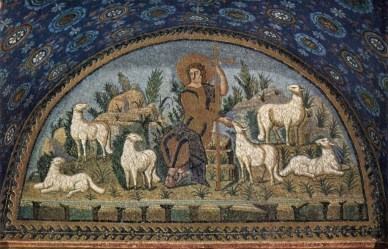 The context of today’s gospel (Jn. 10:27-30) is the feast of the Dedication in Jerusalem. Jesus is in the Temple when he is approached by some Jews who begin to question him, asking if he is the Christ. The feast of the Dedication marked an historical moment in the history of Israel when the Jewish people were able to overcome their Greek oppressors and re-dedicate the Temple by destroying and removing a pagan altar that had been placed there. The context is important because it demonstrates the importance of the Temple in the culture and psyche of the Jewish people. The Temple was the meeting place between God and his people. The Temple was the visible sign for the Jewish people of their belonging to God. This sense of “belonging” is of importance.
 No analogy is perfect but I would like to offer one in regards to Pope Francis’ latest apostolic exhortation, the context of marriage in our world today and what the Holy Father is calling the Church to through his words.
 It is interesting to note what strikes us and what we notice when we journey yet again through a liturgical season through which we have already traversed each year of our lives. My experience has taught me that each year is different and that there are new challenges and new insights gained. This liturgical season of Easter is no different.
 There are many images of ordained priesthood that operate in our Church today – the priest as sacramental minister, the priest as co-worker with the bishop, the priest as pastor, the priest as leader of the worshipping community. These are some of the more “official” images of priesthood but there are others, I have come to realize, that can often operate in the hearts and minds of both priests and laity alike. The priest as administrator and builder operating the parish with efficient ease! The priest as superhero stomping out evil with his superpowers. (I have seen many a vocation poster/image along this line and I have to admit I find it rather silly to say the least.) The priest as shaman battling dark forces behind the scenes by the use of ancient languages and rituals. The priest as philosopher or wisdom figure enlightening the masses with his erudite thought. Are there times when a priest does have to head a building project and administrate a parish? Yes, certainly. There are also times when a priest has to wade through the darkness of sin and evil in life and I hope that at least every now and then the priest does offer something worthwhile for people to consider. All this is to say that there are many images surrounding the priest – some official and some not-so-official yet held in different hearts.
 The Alternate Path