
• About The Alternate Path

The Alternate Path

~ Thoughts on Walking the Path of Christian Discipleship

The Alternate Path

Tag Archives: discipleship

The “author of life”

14 Saturday Apr 2018

Posted by mcummins2172 in homily, Uncategorized

≈ 1 Comment

Tags

author of life, Christianity, discipleship, faith, resurrection, St. Peter

St. PeterIt is said that a tree is known by its fruit and in the first reading from the Acts of the Apostles we can see that the tree of the resurrection is already bearing amazing fruit! And, here specifically, in the life of Peter.

Peter is boldly addressing the people of Israel. That same man who, not that long ago, denied knowing Jesus, who had run away, who had hidden behind locked doors is now proclaiming Christ publically. Peter has received courage through the resurrection but there is an element to this courage that is important to note. Peter receives the courage of love.

Again, not that long ago, Peter had drawn a sword in defense of Jesus and had struck and wounded another person. But today he is not proclaiming the sword or judgment or retribution. He is proclaiming Christ boldly to all the people of Israel and even those directly responsible for the death of Christ. He is saying that yes, they denied the “Holy and Righteous One” and rather asked for a murderer to be set free but he is also proclaiming that forgiveness and mercy is possible in Christ. To the very ones who killed his lord and master, Peter is offering life and hope in Jesus! He even goes on to say that they acted in ignorance and that by their action God has brought to fulfillment what had been proclaimed beforehand about how his salvation was to be brought into the world.

Peter receives courage through the resurrection of Christ but he also receives a healing of his own heart which allows him to receive and live the courage of love. Peter, when he reminds the people that they asked for the release of a murderer contrasts that with their action of putting the “author of life” to death. It is a specific title and one not used by Peter anywhere else in the Gospels.

Jesus is the “author of life” and in Jesus there is no place for hate, for violence or for retribution. There is only life … only life. To welcome Christ as the author of life means to allow Christ to remove all that is false within our hearts – the desire for hate, and for violence and for retribution. Peter knew the risen Lord and Christ removed these false and evil desires from the heart of Peter. Three times on the shore of the Sea of Tiberias, the risen Lord – the author of life – asks Peter, “Simon, son of John, do you love me?” Three times Peter says “yes”.

It is not just courage that Peter receives in the resurrection of Jesus; it is the courage of love and it comes from knowing and being known by – and loved by – the author of life.

The same courage of love is offered to us and it comes from knowing and allowing ourselves to be known and loved by the author of life.

Chinook Winds and Christ

10 Saturday Feb 2018

Posted by mcummins2172 in homily, Uncategorized

≈ Leave a comment

Tags

Christ, Christianity, discipleship, faith, gospel, Jesus

chinook windsOn my recent vacation in the Canadian Rocky Mountains I learned about the chinook wind. The chinook wind is a rapid climate phenomenon produced by specific atmospheric conditions interacting with the stark geography of the high mountains. If all the proper conditions line up correctly a chinook wind is produced which is a steady stream of warm air that flows down from the mountain tops into the valley below on the eastern side of the Canadian Rockies. This wind has been known to sometimes melt thirty inches of snow in the course of a single day! The largest temperature shift produced by a chinook wind was recorded in the seventies when the wind moved the temperature from forty degrees below zero to forty-five degrees above zero in a twenty-four hour period. In the frigid cold of a Canadian winter the chinook wind is a promise of spring and an end to winter.

The beginning of Mark’s gospel can almost be read as the movement and power of a chinook wind! Jesus appears on the scene, he is baptized by John in the Jordan, he overcomes the temptations in the desert and he begins his ministry by calling his first disciples. He casts out demons, he cures many people of their illnesses and in today’s gospel we have our Lord healing a leper. “If you wish,” says the leper, “you can make me clean.” All of this within the very first chapter of Mark’s gospel!

Mark wants us to know that in Christ the grace, life and salvation of God has poured forth into our world and into our hearts – so long frozen and locked in sin and death! Something utterly new and unique is occurring within this man called Jesus! Jesus teaches, he heals, he casts out demons, he calls people with his own authority and he neither acts nor speaks like the scribes and the Pharisees.

It is interesting and telling that it is the people in need – the leper, the person who is ill, the one possessed by a demon, the poor, the flock without the shepherd – who first recognize this and realize that something new is occurring. The leper kneels before Jesus and says, “If you wish, you can make me clean.” Those persons caught up in their own power and need to control – be that political, religious or social – do not recognize (throughout the gospel story) Christ both for who he, himself, is and for the grace and salvation he brings. They are locked within themselves. The people who are in need, the people who recognize their poverty are the ones who are open to the great wind of mercy, life and hope that Christ brings and who receive that life!

Christ brings life and healing but we, on our part, must recognize that we need life, that we are mortally wounded and that, without Christ, we are lost! We must be honest enough to continually admit our need, our frailty and our weakness. This is not just a recognition for the beginning of our faith journey but rather an honest assessment needed for every day of our faith journey! Christ does not come just to encourage or to applaud our efforts. Christ comes to give us life and salvation and without him we are both lost and we are dead!

Today’s gospel passage ends by saying that Jesus remained outside in the deserted places, yet “people kept coming to him from everywhere.” They recognized and they knew that something utterly unique was occurring in this man named Jesus – the very pouring forth of the mercy and life of God into our world! May we also recognize this.

Closed Secularism and the Failure of the Third Servant

22 Wednesday Nov 2017

Posted by mcummins2172 in Gospel Reflection, Uncategorized

≈ Leave a comment

Tags

Christianity, closed secularism, discipleship, faith, secularism

Parable_of_the_Talents_002.jpegIn Mt. 25:14-30 we find our Lord sharing the parable of the talents. Three servants are given different amounts of treasure to invest for their master while he is away – one is given five talents, the second is given two and the third is given one talent. On the master’s return we learn that the first two servants doubled what was entrusted to them (and were therefore rewarded generously by their master) while the third literally buried the talent away that he had been given. He neither lost nor gained anything for the master and was therefore called out on his laziness and was punished by being cast into “the darkness outside.”

The three servants did not own these talents. This is important to note. The talents were given and entrusted to them by the master upon his departure with the expectation that they would be returned and increased upon his return. The master is the only one in the parable who has a rightful claim on the treasure. I do not believe that the parable is about developing our own skills, gifts and abilities (as important and praiseworthy as this might be) but rather about something much deeper and transformative. The Christian has been given things by God in Christ – things that we have no claim to on our own – and the Christian is expected to make these things grow and will be judged accordingly.

Before getting into what I believe is one set of things given to us by God in Christ I would like to propose that the temptation to live according to a closed secularism – so prevalent in our world today – is the temptation and failure of the third servant. (For a helpful presentation of the distinction between a “closed” and “open” secularism, I would refer you to the book Church, Faith, Future: What We Face, What We Can Do by Fr. Louis Cameli.)

The third servant, out of fear, buried the talent entrusted to him. God calls us to the freedom of his Kingdom but such a freedom can be frightening. Remember the Israelites yearning to go back to the bondage of Egypt? Burying something away is a way of side-stepping and avoiding the responsibility of freedom. Burying also means ignoring. It is safe to assume that the third servant, after tucking away his talent, went about the business of his day and what he wanted to accomplish – not really thinking about the master until the day he shows up again. The first two servants, working to increase the talents given them, were active and they were continually thinking about and focused on the master’s return. They were not going about their own plans but were planning and working for their master even as he was gone. Their doubling what had been entrusted to them demonstrates this attitude. Finally, burying is choosing the lesser and valuing it over that which is higher. In our modern sensibility we stumble with this imagery but the highest goal of the servant should be that of seeking to fulfill the will of the master. The third servant placed his own security and his own designs over the task entrusted to him by his master. He therefore chose that which was lesser.

In the choice for a closed secularism we are in essence burying what has been given us. We are choosing the world before the Kingdom of God. We are side-stepping the true freedom of living as a son or daughter of God with its duties and responsibilities (and abundant graces) for the shallow pseudo-freedoms of choosing our next form of entertainment and/or distraction. We are ignoring the call and promise of God for the business of what we think our day should be about and therefore we are choosing that which is lesser over that which is greater.

Now, what has been given us by God in Christ that we have no claim to on our own? One gift, I believe, are the theological virtues and when we choose to live according to the narrative of the closed secular we, in essence, bury what has been given and entrusted to us. The Catechism of the Catholic Church teaches us that the theological virtues have their origin, motive and goal in God. These virtues, in the Christian understanding, are gifts from God and can only be brought to fulfillment through our having relationship with God. If God and the realm of the divine is bracketed out of our reality we sidestep the responsibility of the freedom of a child of God, we ignore God in favor of our plans and preoccupations and we lose sight of the greater in favor of that which is lesser.

Faith, rather than being the virtue that confirms our belief in what God has said and revealed is reduced to an allegiance to what I and my particular group believe and hold to be true above all else. Hope, rather than being that virtue anchored in the coming Kingdom of God – the virtue which pulls us forward through the tumults of life – becomes (at best) a naïve optimism rooted in the ever-changing slogans of the day. Charity, rather than being the love of God above all things for his own sake and our neighbors as ourselves for the love of God, becomes a bargaining with a God relegated to the role of being the source of my comfort and a care for those people within my own personal echo chamber – a care which allows only a grudging acceptance for those people without.

How do we avoid the failure of the third servant? We learn from the first two servants. We do not bury what has been given us by co-opting and choosing to live by the narrative of the closed secular. We remain active, living in such a way in the reality of today as to keep the Master in our thoughts and anticipate his return. We live in such a manner as to make the talents of true faith, hope and love grow in our hearts and in our world!

The temptation of closed secularism is the failure of the third servant. As in all the parables, there is much to learn here if we have the ears to hear.

Knowing the Trinity

10 Saturday Jun 2017

Posted by mcummins2172 in homily, Uncategorized

≈ Leave a comment

Tags

Christianity, discipleship, faith, God the Father, God the Holy Spirit, God the Son, Media, Trinity

the-holy-trinityReflecting on the reality of baptism, Diadochus – a theologian of the early church – writes, “Before a person comes to be baptized, grace is at work, from without, encouraging the soul toward the good, while Satan is at work, from within. After baptism, the contrary is the case. Grace works from within and the demons from without. These continue their work, and work even more evilly than before, but not as present together with grace. The only way they can work is through the promptings of the flesh.”

Today, we as church, reflect on that most profound of mysteries – the Trinity. As Christians we believe and we profess that God is one and that God is three. We are not Unitarians and neither are we Jehovah Witnesses – both of which deny the Trinity. Through the revelation of Jesus Christ and the outpouring of the Holy Spirit we have been brought to the realization that Father, Son and Holy Spirit are one God.

I believe that the quote by Diadochus concerning baptism can help bring us to the only point by which we can begin to contemplate this mystery – from within.  “After baptism, the contrary is the case. Grace works from within and the demons from without.”  The mystery of the Trinity is not a problem to be objectively solved or a riddle that can be puzzled through by our wits alone. The Trinity is a mystery to be lived. This mystery demands the involvement and engagement of the whole person – mind, body and spirit.

God initiated the invitation to this mystery. In John’s gospel we are reminded that, “God so loved the world that he gave his only Son … For God did not send his Son into the world to condemn the world, but that the world might be saved through him.” (John 3:16-17) Through God’s love and God’s initiative (as known in baptism) we are brought into communion with God and into the relationship that is the Trinity.

It is here, in this reality of lived relationship, that we begin our awareness of God as three. Paul – in his second Letter to the Corinthians – writes, “Mend your ways, encourage one another, agree with one another, live in peace, and the God of love and peace will be with you.” (2 Cor. 13:12) Paul firmly connects how we live our lives with the presence of God: “Mend your ways … and the God of love and peace will be with you.” Awareness and knowledge of God can only begin from within. Paul is calling for a sincere examination of conscience here. Are we living our lives in such way that Father, Son and Spirit are welcome to come, reside and be present?

In God’s great revelation to Moses the Lord defines himself by proclaiming, “The Lord, the Lord, a merciful and gracious God, slow to anger and rich in kindness and fidelity.” (Ex. 34:6) Again, awareness and knowledge of God can only begin from within. If God defines himself as “merciful” and “slow to anger and rich in kindness and fidelity” then why would he make himself present and known in a heart that lacks these qualities?

God has taken the initiative and invites us into relationship with himself as Father, Son and Holy Spirit but this mystery, to be authentically known, must first be lived.

It has to begin from within; from how we choose to live our lives.

The choices we make and their consequences.

11 Saturday Feb 2017

Posted by mcummins2172 in homily, Uncategorized

≈ 2 Comments

Tags

Choices and consequences, Christian life, Christianity, discipleship, faith, Mt. 5:17-37, prayer, Sirach 15:15-20, value of prayer

sermon02The first reading from the Book of Sirach (Sir. 15:15-20) begins with a very direct statement,

If you choose you can keep the commandments, they will save you; if you trust in God, you too shall live; he has set before you fire and water to whichever you choose, stretch forth your hand.  Before man are life and death, good and evil, whichever he chooses shall be given him.  

We all have been given the ability and the freedom to exercise our will.  We can each one of us make choices and all choices have consequences.  We are all free to make choices but no one is free to deny the consequences of his or her choices.  How we choose to exercise our will can lead to either more life or can lead to death (in a variety of forms).

Earlier this week the priests of our diocese gathered for our annual study days and at one point the presenter talked a little about the physiological effects of prayer.  He shared that there are studies which indicate that the discipline of prayer is a factor in the development of the areas of our brain connected with attention, focus and compassion.  Prayer (a spiritual discipline) can positively affect our minds, our biology.  This makes sense for Christians because we hold mind, body and spirit together.  It is all connected.  The choice to pray and to enter into the things of faith, which is an exercise of the will, is a choice that leads to more life. 

Interestingly, the presenter also shared that there are studies coming out indicating that there is another choice we can make that negatively impacts the biology of the brain and that is the choice for porn.  Studies are demonstrating that persons who fall into this habit experience an over-development of the lowest level of brain functioning (the reptilian area of the brain) and less development of the areas connected with attention, focus and compassion. 

All choices have consequences – some lead to life and some lead to death.

Our God is a God of life and not death. 

Our Lord goes deep in today’s gospel.  (Mt. 5:17-37)  He is not content to remain on the surface but wants to go to the heart where healing is needed.  Christ is the fulfillment of the law and the prophets and he wants us to know that in our keeping of the commandments is found life.  So Christ calls us to look within – to look at the anger, the greed, the judgmentalism, the pride, the lust that can dwell there – and to begin making choices (by his grace) beyond those sad realities and temptations.  Choices made for sin all leave us locked within our small selves.  God does not want this for us.  God wants us to be turned outward – towards Him and towards our brothers and sisters.  Here is where life is found. 

One final thought.  It begins today – by the choices we make now.  Some of you know that I am not the most consistent in my jogging routine (more than partly due to my own choices, some poor) but I have been around enough joggers to know that you don’t just get up one morning and say, “Today, I will run a marathon.”  It doesn’t work that way.  To run a marathon you prepare months in advance and during those months you make daily choices – some choices are not “fun” and some are downright painful.  The choice to watch what you eat, the choice to plan and chart miles, the choice to run even when you don’t want to, the choice to not do other things when you need to get your running hours in, etc…  The race does not begin the day of the marathon; it begins the months before and it continues with all those daily choices.

We will all face “marathons” in life – times of struggle that will try and test us.  To begin trying to make the choices for life when the struggle is upon us is often just too late.  The choices for God and His commandments that we make today and parents, the choices you help your children to make today, are the choices that will see us through the marathon when it comes. 

Each one of us is free to make our choices but no one is free to deny the consequences of the choices we make. 

Before man are life and death, good and evil…

But whoever obeys and teaches these commandments will be called greatest in the kingdom of heaven.   

Salt and Light: the straightforward nature of discipleship

04 Saturday Feb 2017

Posted by mcummins2172 in homily, Uncategorized

≈ Leave a comment

Tags

Christianity, discipleship, Executive Order banning refugees, faith, salt and light, Syrian refugees

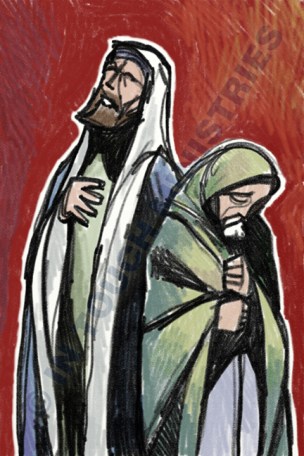
christ-and-disciplesIn Matthew 5:13-16, our Lord gives us two very distinctive images of what it means to live the life of discipleship – salt and light.  We can say that part of the distinctiveness of these images is that both express a sense of “straightforwardness”.
The taste of salt is immediately known.  It is not a flavor that hides under other flavors.  When salt is added the effect on the taste of something is unmistakable.  The same can be said for light.  It also is immediate in its effect.  Either it is there or it is not.  When light shines in a dark space it is known.  Both salt and light are straightforward in their nature.

St. Augustine, in a commentary on Psalm 112 (the psalm which we hear this Sunday) reflects on the similar straightforward nature of discipleship.  Augustine contrasts the straightforwardness of the disciple with the persons who stumble in their envy of the sinner or who feel that their good deeds perish and are of no worth unless they receive some perishable reward in return – such as the acknowledgement and flattery of others.  But the disciple who is straightforward is the one who does the good simply because it is the right thing to do – whether noticed or appreciated by others or not.  The disciple, “neither seeks the approval of other people nor covets earthly riches…” 

Augustine goes on to note that Psalm 112 proclaims that “glory and wealth are in the house of the just one…”  This “house” of the just one is in fact his or her heart and it is there that the just person dwells in a richer style than anything that the world can afford.  The “glory and wealth” of the just one is his or her righteousness before God.  This is a “house” that no thief can break into and a “wealth” that can never be stolen.

In his words to his disciples our Lord is very specific.  “You are the salt of the earth … You are the light of the world …” This straightforward nature of discipleship is already within – it has been placed there by God’s grace in baptism.  We are sons and daughters of God!  This truth does not have to be earned or gained.  It is already present in the very makeup of who we are in Christ!  

We, on our part, have to trust, believe and live it out.  We must overcome the temptation to limit ourselves by the narrow horizons that we (through the voices of our world and our own painful experiences) set.  “Salt losing its taste…” and “light being hidden under a bushel basket…” is, in fact, our giving into our limited horizons and not living according to the fullness of God’s horizon.  It is our being overcome by fear.  As a wise man has noted, our playing small does not serve the will of God! 

This straightforward nature of discipleship has been witnessed these past couple of weeks by our U.S. Bishops’ response to the refugee ban recently issued. Here is a little bit of their letter, 

“We must screen vigilantly for infiltrators who would do us harm, but we must always be equally vigilant in the welcome of friends … Our desire is not to enter the political arena, but rather to proclaim Christ alive in the world today.  In the very moment a family abandons their home under the threat of death, Jesus is present.  And He says to each of us, ‘whatever you did for one of these least brothers of mine, you did for me.’” (MT. 25:40)

It is straightforward.  It is challenging.  It is the Gospel.  

We are the salt of the earth … we are the light of the world … in all things we are called to strive to live according to the horizon that God has set for us. 

That which endures

12 Saturday Nov 2016

Posted by mcummins2172 in homily, Uncategorized

≈ Leave a comment

Tags

Catholic Church, Christian life, Christianity, discipleship, faith, hope, Jesus

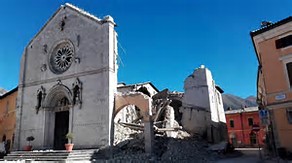
church-destroyed-by-earthquakeScholars suggest that by the time Luke composed his gospel the temple had already been destroyed.  This grand edifice, seemingly unmovable, adorned with costly stones that people were admiring in this passage was, by the time of Luke setting quill to parchment, just a heap of ruins.  It demonstrates how quickly things can change and also how little we really know about what will happen tomorrow.  We like to think we are in charge … but we are not.
Using the temple’s destruction and our Lord’s prophesying of that even as a springboard; today’s gospel (Lk. 21:5-19) invites us to go deep in the spiritual life.

There are levels to the spiritual life.  Saints and mystics throughout the Church’s history testify to this.  The first level and most basic is a level often caught up with outer things.  The grandeur of a temple, the use of precious stones, only a certain style of music or liturgy in worship, only this type of devotional practice or prayer.  Is there a value to the beauty of a church or worship or prayer?  Certainly, that is not being denied but all of these exist in order to usher one into an encounter with the Divine.  If they themselves become the focus then something is off-kilter.  As a friend of mine once said, there is always the temptation to major in the minors.

We have all heard of the recent earthquakes that have hit Italy.  In one of these earthquakes a beautiful church connected to St. Benedict completed collapsed.  A picture I saw just had the front façade standing with all else behind it flattened out.  Miraculously no person was killed when this happened.  What I found inspiring was that as soon as the monks and nuns of the community whose church has been destroyed determined that everyone in their community was accounted for they went out into the larger area and began to minister to others in need – helping physically to dig people out of the rubble and also bringing the sacraments to people.  They did this because they were rooted in something deeper than a building (an external).

The deeper reality our Lord is inviting each of us to in the journey of faith is relationship with him.  There will be false predictions that the end is upon us, nation will rise against nation, and there will be earthquakes, famines, plagues and signs in the sky.  These are all shifts in the greater turning of human history but there will also be personal shifts and turmoil.  People will be led before kings, governors and all the different powers of the world and our lives.  Families will be split and there will not be understanding.  Christians will be hated.  Yet in the midst of all this foretold turmoil of the history of our world and our own personal histories, our Lord – the one who foretold the destruction of the temple – says this, “Remember, you are not to prepare your defense beforehand, for I myself shall give you a wisdom in speaking that all your adversaries will be powerless to resist or refute.”  

“…for I myself shall give you a wisdom in speaking…”  The truth implied here in the midst of all the turmoils that this life brings is a living relationship with Christ.  Remaining on the level of the external spiritually – while not really knowing the Lord or allowing him to know us – will not cut it when life gets tumultuous.  In all seasons of life the Christian must root him or herself in relationship with Christ.  Only in this relationship can be found the wisdom and perseverance that we need in life.

Our Lord listened as people who had no idea of what tomorrow would bring spoke admiringly of the temple.  He asked them to move beyond the external to that which truly lasts.  He asks us to do the same – to trust in him and to find life.

Knowing who we are and knowing who God is.

22 Saturday Oct 2016

Posted by mcummins2172 in homily; mercy, Uncategorized

≈ Leave a comment

Tags

Christ, Christian faith, Christianity, discipleship, humility, Pharisee and tax collector, prayer

pharisee-tax-collector-blogThere are two things that the Pharisee in today’s gospel (Lk. 18:9-14) did not know – two things that kept him from entering into true relationship with God.  This man, who prided himself on his religious observance and his fulfillment of his commitments in life, neither knew himself nor did he really know God.  The tax collector, on the other hand,  knew both and he went home justified.

There are two little short stories to share that can draw this out.  The first story is about an elderly, retired priest who was absolutely venerated in his small town for his kindness and holiness.  The priest was a member of the local Rotary club and he never missed a meeting.  Well, one day he did not show for the monthly meeting and he even seemed to disappear for a while.  No one knew where he was.  The next month there he was at the meeting again.  “Father, where have you been?” people asked.  “Well,” the priest responded in an embarrassed way, “I just finished serving a thirty day prison sentence.”  “What?  You wouldn’t hurt a fly!  What happened?”  “The story is complicated but to sum it up; I had bought a train ticket into the city.  I was standing on the platform when this stunningly beautiful woman appeared on the arm of a cop.  The woman looked at me and then turned to the cop and said, “He did it!  I’m certain he is the one who did it!”  Well, to tell the truth, I was so mesmerized and flattered, I pleaded guilty.”

There is a touch of vanity in the holiest men and women and they see no reason to deny it.  When we are honest we must admit that we are indeed a bundle of paradoxes: we believe and we doubt, we hope and are discouraged, we love and we hate, we are honest and we play games.  Honesty requires that we admit the dark as well as the light within ourselves (and the saints teach us how to laugh about what we find).  The Pharisee lacked this depth of honesty.  The tax collector, on the other hand, truly knew who he was – a man who had nothing to fall back on other than God’s mercy.

The second story witnesses to God and our ability to trust.  A two-story home catches on fire.  The father, mother and several children are rushing out when the smallest child becomes separated, gets frightened and rushes back upstairs.  The small child appears in a smoke-filled window crying.  The father shouts, “Jump son!  Jump!  I will catch you!”  The boy responds, “But I cannot see you!”  To which the father answers, “I know.  I know, but I can see you!”  The Pharisee, so focused on his own righteousness could not bring himself to jump.  He returns home not justified.  The tax collector, with head bowed, beating his breast, knowing himself a sinner and trusting in the goodness of God was able to jump into the mercy of God.  The tax collector returns home justified.

Thomas Merton once remarked that a saint is not someone who is good but someone who experiences the goodness of God.  Someone who knows who he or she is and who also knows who God is.

A God and a community who seek out

10 Saturday Sep 2016

Posted by mcummins2172 in Uncategorized

≈ 1 Comment

Tags

Christian life, Christianity, discipleship, faith, hope, Jesus, mercy, The Good Shepherd, Year of Mercy

good-shepherdOne of the truths revealed in today’s gospel (Lk. 15:1-10) is that our God is not a God content to let people remain anonymous.  The shepherd goes out in search of the lost sheep because that one sheep truly matters to him.  The woman turns the house over searching for the lost coin because that coin is of real concern to her.  We are of concern to God.  We are not alone in a vast universe governed by random chance.  We do not have a God who does not care.  God is willing to seek each one of us out, willing to even enter the darkness of sin and death, to find us and then rejoice in the finding!

But this truth also applies to us who are called to be God’s people in our world.  The Christian community is not meant to be an anonymous collection of individuals made up of people without names and without love – separate and alone.  Because we have been loved by God and sought out by God we must, in turn, strive to love as God loves and seek out as God seeks out.  The community Jesus calls us to is not one of anonymous and separate persons but of brothers and sisters who know each other by name.  Friendship and care must be at the heart of the Christian community but it needs to be noted that this friendship is not of our own doing or crafting.  The friendship of the Christian community flows out of Jesus’ own call to his disciples and obedience to his Word.  The origin of friendship in the Christian community is in God himself.  This is a great mystery and it is a mystery we are called to live and it is a mystery we proclaim in front of a world that seems so intent on reducing the full dignity of the human person to just a caricature of the anonymous individual.

Every person has a name.  Every person has a worth.  Every person is valued and sought out by God.  No one is left behind.  We need to live this friendship of Christ as Church and, by so doing, witness to our world.  For a Christian community to have the most beautiful sanctuary or the most active list of ministries without this friendship that seeks out is (to paraphrase St. Paul and our Lord himself) to be just a noisy gong, a clashing cymbal and even a whitewashed tomb.  No life is ultimately produced.

The identity of the Church is not found by remaining within but is realized in mission.  It has been this way from the very beginning with the outpouring of the Holy Spirit and the call to proclaim the good news to the ends of the world!  We each have a name given by God and a task given by God, we only become who we are meant to be as we live the task we have been given.  The Christian community only becomes who she is meant to be when she lives the friendship she has been given by Christ.

This friendship begins within the Christian community herself and then it goes out into the world.  We must seek out one another.  We must be of concern to one another.  In order to be true to the gift that we were given (meaning being sought out by God himself), we cannot remain content in just being a collection of anonymous individuals.  When we meet one another in the friendship of Christ we learn we can even look out on the multitudes of our world and see not just anonymous individuals who threaten my space and my freedom but brothers and sisters and the multitudes of people who are alone and suffering learn that they are in fact not alone and that there is a God and a people who seek to care and who seek to know their name.

Let us invite one another to wisdom. St. Teresa of Calcutta, pray for us!

04 Sunday Sep 2016

Posted by mcummins2172 in homily, Uncategorized

≈ Leave a comment

Tags

Christ, Christian life, Christianity, discipleship, faith, hope, Kingdom of God, Mother Teresa, Sisters of Charity, St. Teresa of Calcutta

Mother Teresa

St. Teresa of Calcutta

In the first reading (Wisdom 9:13-18b) we are told that wisdom is a gift given from on high.  It is not something we acquire by our own effort and ingenuity but it is a gift from God.  Or who ever knew your counsel, except you had given wisdom and sent your Holy Spirit from on high?  And thus were the paths of those on earth made straight.  Wisdom is the fruit of relationship with God and, as we learned in last Sunday’s gospel, it both comes and is received on our part through the actions of humility and living a generosity toward those who cannot repay us.

But we can invite one another to wisdom.  This is a truth found in today’s second reading (Philemon 9-10, 12-17).  The Letter to Philemon is a short letter written by Paul to Philemon, a member of the Christian community, on behalf of Onesimus – a runaway slave of Philemon’s whom Paul had befriended and converted while they were held together in prison.  According to the law of the day, Philemon had the right to punish Onesimus severely, even having him put to death, but Paul writes and asks Philemon not only to be lenient and receive Onesimus back but to even receive him back as now a brother in Christ.

Paul is inviting (not forcing) Philemon to a new awareness.  He is inviting him to wisdom in Christ.  Things had now changed.  Elsewhere Paul will write …in Christ there is neither slave nor free…  Paul is aware of this new reality, he does not wish to force it on Philemon for that would not be true to the gospel but he does want to invite Philemon to this new awareness.  Paul is also crafty about this invitation though.  He knows that when his letter arrives it will not be read privately by Philemon first; rather it will be read before the whole gathered community with Philemon present.  All eyes will certainly be on Philemon but also, if the members of the community are honest, all eyes will need to be on each of their own hearts as the letter invites all who listen to it to wisdom and a greater awareness even to our own day.  Can we receive the other person as brother and sister in Christ?

Christ continually invites us into the wisdom of the Kingdom of God.  It is a wisdom that asks us to be willing to continually step away from the rigid and constricting thought of “this is the way things are, this is the way things will always be” toward the ever new possibility of the Kingdom.  If anyone comes to me without hating his father and mother, wife and children, brothers and sisters, and even his own life, he cannot be my disciple.  Christ continually invites us to calculate and set our lives by the ever new possibility of the Kingdom of God!  Just like the person building a tower calculates out resources or the king calculates out the cost of a battle we must calculate and set our lives not by our own small and often meager possessions of thought but by the sheer gratuity of God’s Kingdom!  Christ invites us set our lives by this wisdom!

Today, the Church gives us a wonderful witness of a person who set and calculated her life by the sheer gratuity of God’s Kingdom in St. Teresa of Calcutta.  Where the world saw a simple little woman, God saw a great disciple to our age.  Where the world saw lives with no value, St. Teresa saw children of God.  Where the world saw hopelessness, St. Teresa found beauty.  Where the world saw wealth, St. Teresa saw poverty.  Where the world gave up, St. Teresa persevered.

St. Teresa allowed herself to be invited into the wisdom of the Kingdom of God – even in the darkness of it all.  Now, like Paul himself, St. Teresa invites us into the ever new possibility of the wisdom of Christ and the Kingdom of God.

“If you can’t feed a hundred people then feed just one.”

“Do not wait for leaders; do it alone, person to person.”

“If you judge people, you have no time to love them.”

St. Teresa of Calcutta, pray for us!   

← Older posts
Newer posts →
Follow The Alternate Path on WordPress.com

Enter your email address to follow this blog and receive notifications of new posts by email.

Previous Posts

  • December 2025
  • November 2025
  • August 2025
  • April 2025
  • February 2025
  • January 2025
  • December 2024
  • August 2024
  • July 2024
  • June 2024
  • May 2024
  • April 2024
  • March 2024
  • February 2024
  • January 2024
  • December 2023
  • November 2023
  • October 2023
  • August 2023
  • July 2023
  • May 2023
  • February 2023
  • January 2023
  • December 2022
  • August 2022
  • July 2022
  • April 2022
  • January 2022
  • December 2021
  • September 2021
  • August 2021
  • July 2021
  • May 2021
  • April 2021
  • January 2021
  • December 2020
  • November 2020
  • October 2020
  • August 2020
  • July 2020
  • May 2020
  • April 2020
  • March 2020
  • February 2020
  • December 2019
  • October 2019
  • September 2019
  • August 2019
  • July 2019
  • May 2019
  • April 2019
  • March 2019
  • February 2019
  • December 2018
  • November 2018
  • October 2018
  • August 2018
  • July 2018
  • June 2018
  • April 2018
  • March 2018
  • February 2018
  • January 2018
  • December 2017
  • November 2017
  • September 2017
  • August 2017
  • July 2017
  • June 2017
  • May 2017
  • April 2017
  • March 2017
  • February 2017
  • January 2017
  • December 2016
  • November 2016
  • October 2016
  • September 2016
  • August 2016
  • July 2016
  • June 2016
  • May 2016
  • April 2016
  • March 2016
  • February 2016
  • January 2016
  • December 2015
  • November 2015
  • October 2015
  • September 2015
  • August 2015
  • June 2015
  • May 2015
  • April 2015
  • March 2015
  • February 2015
  • January 2015
  • December 2014
  • November 2014
  • October 2014
  • September 2014
  • August 2014
  • July 2014
  • June 2014
  • May 2014
  • April 2014
  • March 2014
  • February 2014
  • January 2014
  • December 2013
  • November 2013
  • October 2013
  • September 2013
  • August 2013
  • July 2013
  • June 2013
  • May 2013
  • April 2013
  • March 2013
  • February 2013
  • January 2013
  • December 2012
  • November 2012
  • October 2012
  • September 2012
  • August 2012
  • July 2012
  • June 2012
  • May 2012
  • April 2012
  • March 2012
  • February 2012
  • January 2012
  • December 2011
  • November 2011
  • October 2011
  • September 2011
  • August 2011
  • July 2011
  • June 2011
  • May 2011
  • April 2011
  • March 2011
  • February 2011
  • January 2011
  • December 2010
  • November 2010
  • October 2010
  • September 2010
  • August 2010
  • July 2010
  • September 2008
  • August 2008
  • April 2008
  • March 2008
  • February 2008
  • January 2008
  • December 2007
  • November 2007
  • October 2007
  • September 2007

Popular Posts

  • thealternatepath.org/wp-c…
  • thealternatepath.org/wp-c…

Blog at WordPress.com.

  • Subscribe Subscribed
    • The Alternate Path
    • Join 156 other subscribers
    • Already have a WordPress.com account? Log in now.
    • The Alternate Path
    • Subscribe Subscribed
    • Sign up
    • Log in
    • Report this content
    • View site in Reader
    • Manage subscriptions
    • Collapse this bar
 

Loading Comments...