 For close to a year now I have been volunteering at the wolf habitat in Bays Mountain Park in Kingsport, TN. The wolf habitat has been around for a few decades and currently is home to ten wolves. When my schedule allows, I go to assist with the feeding of the wolves which occurs twice a week. We do not go inside the enclosure but rather toss the food in. It is only the naturalists who can go in with the wolves and even then only under the strictest guidelines.
Why do I do this? Partly, I think, because I have always been intrigued by wolves. Wolves are fascinating animals and this awareness is only deepened the more one learns about them. Their communal/pack instinct and identity is amazing and offers much for us to learn and even learn from. Yet, wolves are often misunderstood and maligned throughout their history with the human race. This needs to be corrected. Also, helping out at the habitat is a small way to carry about the task of being a good steward of the creation that God has entrusted us with. Our faith tradition tells us that we have been entrusted with the responsibility of stewardship to this planet and all of its inhabitants. Each Christian should find some way in his or her life to live this responsibility.
The wolf enclosure is quite large and quite protected for safety – both for the animals and the human onlookers. There is a high fence with electric wiring top and bottom and even a larger timber frame meant to protect the fence from falling trees. The regulating agency is always inspecting and there seems to be continual discussions about improving safety.
 Like the whole nation I gasped when I saw the video of the little boy in the enclosure with the gorilla. Sadly, I have also watched as the ensuing social media debate has seemed to devolve to either “team human” or “team animal” as if those are the only two options and that they have to be opposing by nature. Can we just be okay with acknowledging the tragedy all around and leave it at that? It is tragic that the child fell into the enclosure and could have been seriously harmed. It is tragic that the zookeepers (the very people who knew, cared for and protected the gorilla) had to make a gut-wrenching and quick decision that I know I would not want to have to make. It is tragic that the gorilla was shot and killed. It is easy for everyone else not there – now after a continuous loop of the video has been played and scrutinized by the media for days – to be an arm-chair quarterback. The reality of the situation was not easy; it was tragic. Sadly, life is sometimes tragic.
Tragedy, for the Christian, has roots but it also points out hope. The story of our faith tells us that God created the universe, the world and all of its wonders and that God looked upon it all and said that it was good. Our faith also tells us that in the beginning humanity walked in the garden of creation together with God and in harmony with all living creatures whom humanity even helped to name. In pride, humanity sinned and our relationship with God and with all of creation was fractured and broken. Yet, just as there is a part of us which yearns for restored relationship with God and knows that we are meant for that there is a part that knows we are meant for restored relationship with all of creation. This is not the naïve, secular pantheism touted in movies but rather that which lies at the heart of the gasp of wonder we experience when we catch sight of a deer bounding through the forest or a whale breaching the surface of the water or a hawk cutting the air or the simple beauty of a butterfly or a bird. We are connected yet, tragically, the connection breaks. We go to animals whether in enclosures or out in the wild partly because we know in our hearts we are meant for that connection, that it was there once, even if it broken now.
But it will not be broken forever. This is the hope. The twenty-first chapter of the Book of Revelation tells us that there will be a “new heaven and a new earth.” The hope of the Christian is not in some spirit-only realm where the shackles of the body and creation are finally left behind – a thought akin more to some schools of Greek philosophical thought and Gnosticism than the Kingdom proclaimed by Christ. Jesus Christ rose bodily! The Virgin Mary was assumed bodily into heaven! In the creed we profess our belief in a bodily resurrection! God looked upon all that he made and said it was good. God does not disdain his creation and for us to disdain creation means to disdain the Creator. God is pure spirit but we are not. To think we become pure spirit after death and in the resurrection would mean to question the wisdom of the Creator. We will not become what we are not in the fullness of God’s Kingdom. We will not become angels. We will become as Christ and his mother (the first fruits of the future resurrection) risen in the glorified body.
I think that part of the “new heaven and new earth” foreseen in the Book of Revelation is our restored relationship both with the Creator and with all of his creation. What exactly this means and how it will look I do not know but I do believe that God is both creator and redeemer and that the two are not opposed. The Creator does not disdain his creation. This deep and abiding hope is within us and it pulls us forward.
I have been told that I have now been around enough that the wolves on Bays Mountain recognize me both visually and by my scent. A few times now my eyes have locked with a wolf’s eyes. It is a neat moment. There is wonder there and in that wonder is both a remembrance and a hope. God’s Kingdom will be established, the tragedy of sin and suffering will be overcome and right relationship will be restored.
 After twenty-one years of priesthood, I had a stunning theological realization as I reflected on this Sunday’s gospel (Lk. 9:11b-17) of our Lord’s feeding of the multitude with some fish and some bread. This was the Church’s first potluck meal! We bring a little bit of this, we bring a little bit of that and somehow we feed the multitude! If a person wants a scriptural warrant for the potluck, here it is!
 Today we celebrate Trinity Sunday and as Church we reflect for a moment on the greatest of mysteries – God is a communion of persons – Father, Son and Holy Spirit. Here it is most helpful to remember the Christian understanding of mystery: mystery is not a puzzle to be figured out and then set aside but rather a reality to be lived and as we live the reality we, ourselves, are brought to deeper understanding. On our own accord we cannot reason our way to the Trinity. The Trinity is the ultimate truth both revealed and given and it is in living in this truth that we come to be grasped by it. Our faith affirms that the best way to live within the truth of the Trinity (to be grasped and moved by the mystery) is the way of love.
 In looking at my Facebook feed this weekend I have been reminded that we are in the midst of graduation season. Picture after picture of smiling graduates, at all levels, all across the country… We certainly celebrate with graduates and congratulate them on what they have achieved. But it is worthwhile to also note that behind every graduate stands dedicated teachers – men and women who often selflessly work for the good of their students.

 One take away that I have gained from Amoris Laetitia is to pay attention to the little things because they do matter. Like many people, I am seeking to follow the Holy Father’s recommendation and read the exhortation a little at a time in order to reflect as I go. I am doing my best to obey the pope in this regard and I have found that the document does lend itself to this style of reflective reading.
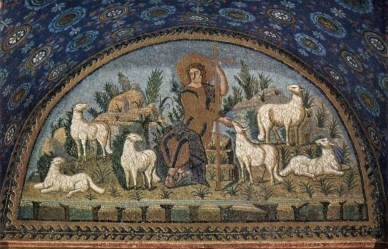 The context of today’s gospel (Jn. 10:27-30) is the feast of the Dedication in Jerusalem. Jesus is in the Temple when he is approached by some Jews who begin to question him, asking if he is the Christ. The feast of the Dedication marked an historical moment in the history of Israel when the Jewish people were able to overcome their Greek oppressors and re-dedicate the Temple by destroying and removing a pagan altar that had been placed there. The context is important because it demonstrates the importance of the Temple in the culture and psyche of the Jewish people. The Temple was the meeting place between God and his people. The Temple was the visible sign for the Jewish people of their belonging to God. This sense of “belonging” is of importance.
 No analogy is perfect but I would like to offer one in regards to Pope Francis’ latest apostolic exhortation, the context of marriage in our world today and what the Holy Father is calling the Church to through his words.

 It is interesting to note what strikes us and what we notice when we journey yet again through a liturgical season through which we have already traversed each year of our lives. My experience has taught me that each year is different and that there are new challenges and new insights gained. This liturgical season of Easter is no different.

