Tags
Bible, Catholic Church, Christ, Christian life, Christianity, discipleship, Easter, faith, God, Jesus, Mk. 6:30-34
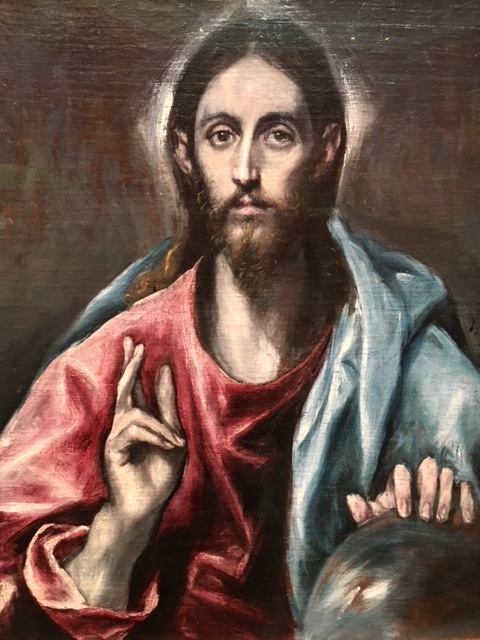
The Gospel passage for this Sunday (Mk. 6:30-34) has the apostles returning to the Lord after having been sent out on mission to proclaim the coming of the Kingdom of God, to heal the sick and to aid the weak and the poor. The evangelist makes note of a “power” being conferred on the apostles in order to accomplish these tasks. The power mentioned here is not a worldly power because those first disciples had no such power. They had neither wealth nor influence. The “power” that the disciples went forth with were obedience to Jesus, the proclamation of his words and repeating the Lord’s gestures of mercy. Through these simple powers great things happened and the apostles return full of excitement to share their experiences.
In our Christian tradition there is a famous quote that states, “Christian, forget not your dignity!” In relation to today’s Gospel, I think we can say, “Church, forget not your power!”
The power of the Christian community is threefold: 1. obedience to Jesus, 2. the proclamation of his words, 3. repeating the Lord’s gestures of mercy.
Obedience to Jesus. Jesus is Son of God, Son of Man and Lord of history. Why do we keep searching for other lords and other messiahs? Yet, we do. There are great men and great women throughout history yet none of these people are Son of God and Son of Man. The witness of the disciples is found both in what they said and in what they did. They remained with the Lord. They returned to him (as we see in today’s Gospel). When they wandered and stumbled, they turned back. Even when they scattered from the cross; they gathered together again in the locked room. In times of triumph, times of struggles, and times of uncertainty the disciples remained with the Lord. There is a power found in obedience to the Lord.
The proclamation of Christ’s words. There are many great ideas, theories and achievement throughout human history and these amaze and astound us. We celebrate what is good and true. But even as the Church can and should learn from these achievements, we must remember that the words that we have to share are authentic, true and needed for every place and age. They are words that truly bring life. The words are not of our own making; rather they have been entrusted and given to us. We are to speak Christ’s words to our world. Elsewhere in the Gospel our Lord tells us that no one puts a light under a bushel basket yet how often are we tempted to give the Gospel second place in our lives to the latest theory, psychology, philosophy or social fad? When we do so are we not, in essence, placing a basket over the light of the Gospel? The words of Christ truly heal because Christ alone is the Lord of life.
The Lord’s gestures of mercy. Jesus knew the power of gesture: he writes in the sand, he touches the leper, he sits down at the well with the Samaritan woman. It is interesting to note how our Lord’s gestures were ever directed toward mercy. The Church is at its best when it lives our Lord’s gestures of mercy – when the person seen as untouchable is touched, when the hungry are fed and when the sinner is forgiven. These gestures will not make the evening news but they are true and they bring hope and healing to our world.
At the end of today’s gospel passage, we are told that when Jesus saw the crowd his heart was moved with pity. The people were starving. They were tired of that which failed to satisfy. We, also, are tired of that which fails to satisfy. Salvation does not come through the powers of our world. Salvation comes through God’s mercy at work in our world, our hearts and our lives.
Christian, forget not your dignity! Church, forget not your power!

 On my recent vacation in the Canadian Rocky Mountains I learned about the chinook wind. The chinook wind is a rapid climate phenomenon produced by specific atmospheric conditions interacting with the stark geography of the high mountains. If all the proper conditions line up correctly a chinook wind is produced which is a steady stream of warm air that flows down from the mountain tops into the valley below on the eastern side of the Canadian Rockies. This wind has been known to sometimes melt thirty inches of snow in the course of a single day! The largest temperature shift produced by a chinook wind was recorded in the seventies when the wind moved the temperature from forty degrees below zero to forty-five degrees above zero in a twenty-four hour period. In the frigid cold of a Canadian winter the chinook wind is a promise of spring and an end to winter.
 There are two things that the Pharisee in today’s gospel (Lk. 18:9-14) did not know – two things that kept him from entering into true relationship with God. This man, who prided himself on his religious observance and his fulfillment of his commitments in life, neither knew himself nor did he really know God. The tax collector, on the other hand, knew both and he went home justified.
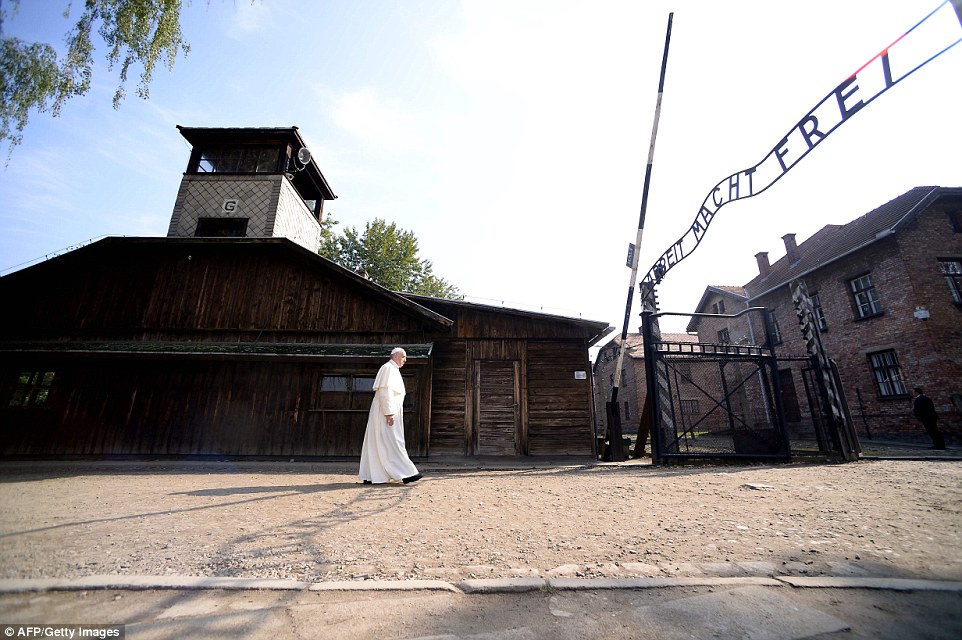 You may be aware that World Youth Day is occurring in Krakow, Poland. World Youth Day is a gathering of the Church’s youth and young adults for days of catechesis, worship and prayer. The event culminates on Sunday with a Papal Mass. Pope Francis is in Krakow with the world’s young people. I have been viewing different images via social media from the gathering but what has struck me most is a six minute video of Pope Francis visiting the concentration camp at Auschwitz and taking some private moments of prayer in the cell which housed St. Maximillian Kolbe before his death. St. Maximillian Kolbe was a Catholic priest who volunteered his own life in order to let another prisoner live who was a husband and father. The video, which is all in silence, is almost surreal. (I have posted the video on our parish Facebook page.)
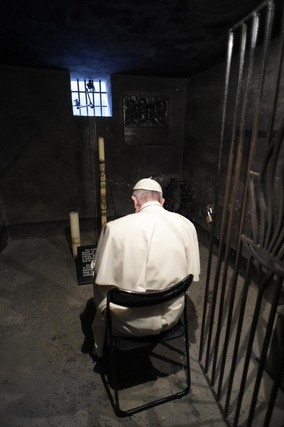 Pope Francis arrives simply at the cell as is his wont. He first peers into the darkened cell then steps in. A chair is brought in and the Holy Father sits and we are given this amazing image of the successor to St. Peter clad in white sitting in a darkened cell with his head bowed in prayer in this place of unimaginable horror.
 “Who do the crowds say that I am?” “Who do you say that I am?” These questions of our Lord have continued down through history ever since he first asked them to that small group of followers. Every age has to pick up the question and find the answer. Every disciple has to answer the question and, I think, even in the life of disciple the answer shifts as we come to know more and more who Jesus is. (I know that it has for me.)
 At one point in his commentary on this Sunday’s Responsorial Psalm (Ps. 93), St. Augustine shares this observation: Humble people are like rock. Rock is something you look down on, but it is solid. What about the proud? They are like smoke; they may be rising high, but they vanish as they rise.
 The Alternate Path