 Both of my parents were converts. My father grew up in the Presbyterian Church and my mother grew up as a Southern Baptist. There is a story told in my family that once, not long after my father’s conversion, my two great aunts from Mississippi (both spinsters and staunch Presbyterians to boot) visited my grandfather. Noticing some dust on the cover of the family bible, one great aunt is said to have remarked, “I guess if this Bible cover was not so dusty Jack would never have converted.” I am not sure how my grandfather and grandmother replied although I would wager that a bit of a chill went through the room.
I, for one, am very grateful for my parents’ conversions and acknowledging that my views would differ from my great aunt’s in this regard (i.e. seeing my father’s conversion to Catholicism as a fulfilling of his faith journey and not a loss); I do believe her remark about the family Bible carries an intuition of truth. There is a power and a grace to be found in Sacred Scripture. The Bible is God’s holy word and within it we encounter our risen Lord.
In his Apostolic Letter, Misericordia et Misera given at the conclusion of the Jubilee Year of Mercy, Pope Francis brings to summation the Holy Year and puts forward his hope that the work of mercy will continue and be ever-strengthened in the Church.
(The Holy Year) must continue to be celebrated and lived out in our communities. Mercy cannot become a mere parenthesis in the life of the Church; it constitutes her very existence, through which the profound truths of the Gospel are made manifest and tangible. Everything is revealed in mercy; everything is resolved in the merciful love of the Father. (MM, 1)
The Holy Father reflects on how best to continue the work of mercy and he puts forward some specific thoughts for discernment by the Church – mercy should be celebrated and at the heart of every Eucharistic celebration and every homily, every encounter involving the sacrament of anointing should be guided by mercy and certainly mercy should be found in abundance within the sacrament of reconciliation. Here the Holy Father grants the authority for every priest to forgive the sin of a procured abortion. This permission given even gained the attention of the secular media for at least a day or two.
What did not garner as much attention though is an invitation that the Holy Father extended to the Church in his apostolic letter. It is an invitation worthy of consideration and it is why I began this article by sharing the story of my two great aunts. The Holy Father invites the Church to consider a Sunday, “given over entirely to the word of God”.
Why not just mandate such a thing? Certainly the pope has the authority. Here, I believe, Pope Francis is demonstrating a pastor’s wisdom. Some things within the Church – especially those liturgical and devotional – are best established and encouraged from the foundation up rather than the top-down. Pope Francis is inviting the Church into a dialogue regarding this possibility and he is giving his permission as the successor of Peter for this dialogue, this possibility, to occur and to even grow organically from within the life of the Church. He is encouraging an idea to grow.
It is an idea already present within the full life of our faith and specifically rooted and expressed for our time in the document Dei Verbum of the Second Vatican Council. Here are three quotes from the final chapter of that document which demonstrate this. “It follows that all the preaching of the Church, as indeed the entire Christian religion, should be nourished and ruled by sacred Scripture.” (DV, 21) “Access to sacred Scripture ought to be open wide to the Christian faithful.” (DV, 22) “Just as from constant attendance at the Eucharistic mystery the life of the Church draws increase, so a new impulse of spiritual life may be expected from increased veneration of the Word of God, which ‘stands forever’.” (DV, 26)
Below are the two paragraphs of Misericordia et Misera specifically devoted to this invitation. The first paragraph can be viewed as a summation of Vatican II’s Dei Verbum, the second is the invitation given by the Holy Father to the Church universal.
The Bible is the great story of the marvels of God’s mercy. Every one of its pages is steeped in the love of the Father who from the moment of creation wished to impress the signs of his love on the universe. Through the words of the prophets and the wisdom writings, the Holy Spirit shaped the history of Israel as a recognition of God’s tenderness and closeness, despite the people’s infidelity. Jesus’ life and preaching decisively marked the history of the Christian community, which has viewed its mission in terms of Christ’s command to be a permanent instrument of his mercy and forgiveness (cf. Jn 20:23). Through Sacred Scripture, kept alive by the faith of the Church, the Lord continues to speak to his Bride, showing her the path she must take to enable the Gospel of salvation to reach everyone. I greatly desire that God’s word be increasingly celebrated, known and disseminated, so that the mystery of love streaming from this font of mercy may be ever better understood. As the Apostle tells us clearly: “All Scripture is inspired by God and profitable for teaching, for reproof, for correction, and for training in righteousness” (2 Tim 3:16).
It would be beneficial if every Christian community, on one Sunday of the liturgical year, could renew its efforts to make the Sacred Scriptures better known and more widely diffused. It would be a Sunday given over entirely to the word of God, so as to appreciate the inexhaustible riches contained in that constant dialogue between the Lord and his people. Creative initiatives can help make this an opportunity for the faithful to become living vessels for the transmission of God’s word. Initiatives of this sort would certainly include the practice of lectio divina , so that the prayerful reading of the sacred text will help support and strengthen the spiritual life. Such a reading, centered on themes relating to mercy, will enable a personal experience of the great fruitfulness of the biblical text – read in the light of the Church’s spiritual tradition – and thus give rise to concrete gestures and works of charity.(MM, #7)
Could this be the beginnings of a liturgical feast for the Bible? What would it look like? I am not sure and I do not know if even the Holy Father knows but he is inviting the Church to the possibility and even encouraging a faith-filled creativity. As both a Christian disciple and a pastor of a parish in the belt buckle of the Bible Belt – where there is such a strong emphasis on Scripture in the surrounding churches – I find this invitation of Pope Francis to creatively dream of such a day to be both exciting and necessary! One of the great gifts of the Second Vatican Council was in reminding us that the Bible belongs to every member of the Church, that it should be picked up and read and that within Sacred Scripture we encounter Christ. The Bible is much more than just proof texts for the sacraments and devotions. A day given over entirely to the Bible would not lessen our sacramental identity as Catholics but would rather root our identity deeper in an awareness that we are a people of both Word and Sacrament!
A day devoted to the Bible would also be a strength and support for the ongoing work of mercy. “I greatly desire that God’s word be increasingly celebrated, known and disseminated, so that the mystery of love streaming from this font of mercy may be ever better understood,” writes the Holy Father. God’s word is a “font of mercy” which opens our minds in greater awareness, our imaginations in new possibilities and our hearts in greater charity. Or, as expressed in Dei Verbum, “This nourishment (of Scripture) enlightens the mind, strengthens the will and fires the hearts of men with the love of God.” (DV, 23)
Pope Francis, through his life as a Jesuit and priest is someone steeped in the Ignatian spiritual tradition of entering Scripture. The Holy Father speaks from experience when he refers to Scripture as a “font of mercy” and he is here inviting the whole church to continually turn to this font.
It is a simple and beautiful invitation that the Holy Father puts forward in his letter – a day given over entirely to the Word of God – and within this invitation is found the possibility of innumerable graces and blessings. I am praying how the parish I serve might answer this invitation of our Holy Father. I would encourage all members of the Church to take to heart this simple and beautiful invitation of our Holy Father.
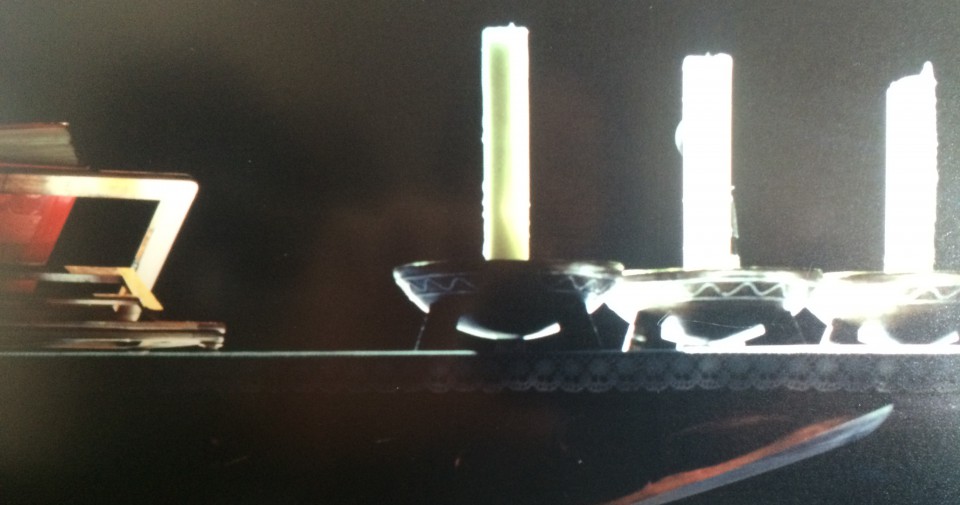
 During the weeks of Advent we hoped for and awaited the coming of the Messiah. On Christmas we rejoiced in the birth of our savior. Now, on Epiphany we travel with the wise men from the East in order to “do him homage”, in order to adore Christ.
 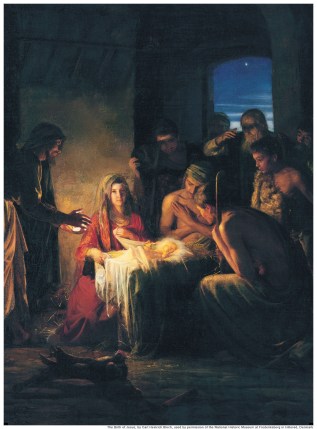 Caesar demanded a census and the whole world was in motion and turmoil.
 The movie “Hacksaw Ridge” is a powerful and true story about a man holding firm to his convictions in the face of strong opposition.
 (In light of the recent news events demonstrating the danger of false stories, I am reposting this article originally written in 2014. We need to be discerning and prudent in all things media-related.)
 This last week I saw the movie “Arrival”.
 This past week I was able to visit with a parishioner who, as a hobby, makes wine.
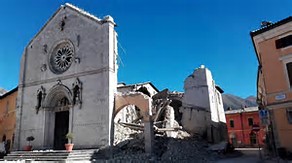 Scholars suggest that by the time Luke composed his gospel the temple had already been destroyed. This grand edifice, seemingly unmovable, adorned with costly stones that people were admiring in this passage was, by the time of Luke setting quill to parchment, just a heap of ruins. It demonstrates how quickly things can change and also how little we really know about what will happen tomorrow. We like to think we are in charge … but we are not.
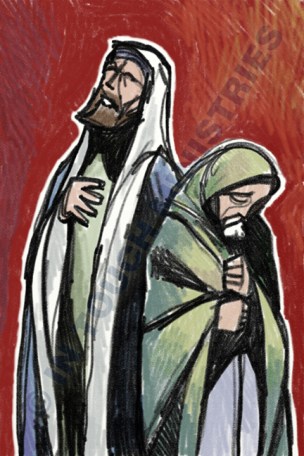 There are two things that the Pharisee in today’s gospel (Lk. 18:9-14) did not know – two things that kept him from entering into true relationship with God. This man, who prided himself on his religious observance and his fulfillment of his commitments in life, neither knew himself nor did he really know God. The tax collector, on the other hand, knew both and he went home justified.
 One of the truths revealed in today’s gospel (Lk. 15:1-10) is that our God is not a God content to let people remain anonymous. The shepherd goes out in search of the lost sheep because that one sheep truly matters to him. The woman turns the house over searching for the lost coin because that coin is of real concern to her. We are of concern to God. We are not alone in a vast universe governed by random chance. We do not have a God who does not care. God is willing to seek each one of us out, willing to even enter the darkness of sin and death, to find us and then rejoice in the finding!
