“Amoris Laetitia” and the clearing of a brush pile: an analogy

Tags

, , , , ,

amoris-laetitia-bannerNo analogy is perfect but I would like to offer one in regards to Pope Francis’ latest apostolic exhortation, the context of marriage in our world today and what the Holy Father is calling the Church to through his words.

A few years ago I purchased some land in the mountains of East Tennessee near the state line with North Carolina. The land is mostly wooded but there are two fields that sit along the road.  Once I acquired the land I bought the architectural plans of a small home design and I hired a local contractor to do the building.  In the process electricity had to be run to the site where the home would sit.  One day the electrical workers arrived and with an authority second only to God they immediately cut down a stand of towering pine trees in order to run the electrical lines.  The trees fell into one of the fields and there they lay … for a couple of years.

My original intent to cut the trees up quickly and be done with it did not materialize and by the time that I did get around to beginning the work an almost impenetrable stand of brush and thorns had grown up around the trees. It has been hard and tedious work.  Many times my hands, arms and face have been slashed with the thorn brambles that I am convinced are conscious and out to wreck vengeance upon me.  Each time that I am able to put in some work on this task I leave exhausted and worn out.  I have pretty much cut everything down to the massive trunks now and have many piles of wood and bramble to be burned as proof of my efforts but it has been a long haul and, even yet, not fully completed.

The analogy is this. Trees have fallen into the life-giving field of marriage and they have done damage and have lain there for quite some time and an almost impenetrable stand of brush and thorns have grown up.  Pope Francis, in his exhortation, is inviting the Church not just to wax philosophical or theological about marriage nor to bemoan the ruinous state of affairs and wag fingers but rather to get about the hard and tedious work of clearing away the trees, thorns and brambles and reclaiming the life-giving field of marriage.

This being said, there are some important nuances to be aware of.

The trees were cut down due to our activity and selfishness. Extreme individualism, a pace of life that is chaotic and stressful, a culture of greed that leaves many people and families impoverished, addictions that wreak havoc on families, a throw-away mentality even in regards to relationships, even a theologically abstract understanding of marriage – these are all means by which the trees have been cut down and have fallen, causing immense damage.

One temptation is to just let the trees lie where they are and let the brush and thorns continue growing and accept that this is just the way things are and how they are meant to be. But to do so would be to deny both the beauty of the field and its full possibility and how it, by its very nature, is meant to give life.

No one can think that the weakening of the family as the natural society founded on marriage will prove beneficial to society as a whole. The contrary is true: it poses a threat to the mature growth of individuals, the cultivation of community values and the moral progress of cities and countries.  There is a failure to realize that only the exclusive and indissoluble union between a man and a woman has a plenary role to play in society as a stable commitment that bears fruit in new life.  We need to acknowledge the great variety of family situations that can offer a certain stability, but de facto or same-sex unions, for example, may not simply be equated with marriage.  No union that is temporary or closed to the transmission of life can ensure the future of society.  (AL # 52)

If letting the trees lie and the brush and thorns grow and thinking all the while that it is the norm is a disservice to the field then just shaking our heads as Church and wagging our fingers at society is also a disservice that does no good. This is the second temptation we might have in reaction to the current state of affairs but nothing ultimately good, the Holy Father reminds us, comes out of simply throwing hard stones.  Contemplating the nature of marriage and family life certainly has importance and value but just sitting back and waxing on about an idealized form of marriage does not clear away the brush and thorns that have grown up.  Exalted language and thought alone can sometimes be used as a cover for the dual sins of sloth and tired resignation and a way to avoid the hard work that needs to be done.

What then are we to do as Church? In no uncertain terms, Pope Francis is calling us into the thicket in order to begin the hard and tedious work of clearing away the brush and thorn and regaining the field.  He is calling everyone in the Church to this work and he also knows that within the labor itself we will learn some things.

Yes, the thorns that have grown up can sting and cause pain but thorns also are a means to protect. There are human persons living within the reality and brokenness of marriage in our world today.  Human persons who are made in the image of God and who have been wounded by forces beyond their control.  These people need to be respected.  One way to respect them is to be willing to meet them where they are at and not just treat them as a theory, a statistic or that group “over there”.  This means going into the thicket and, yes, even being willing to suffer the stings and pain of the thorns that people often can carry in life as a means to protect.  Please note that this does not imply denying the reality of sin and the need to take responsibility for sinful choices and behavior.  It means trusting in the power of the gospel and being willing to carry the gospel into every situation.

Once we get into the thicket we will realize that there is life and beauty even within the thorns and brush. The human spirit is an amazing thing – even producing beauty and goodness amidst brokenness and confusion.  Is it the perfect beauty of the field?  No, but it is beauty nonetheless and there is really no reason why this should not be acknowledged.  Can there be beauty within a broken and separated family?  Yes.  Can there be honest care found in a committed same-sex relationship?  I think so.  Do these negate the beauty of marriage as God has intended it?  No, just as that beauty found in the very limited confines of the thicket does not deny the beauty or the life-giving nature of the field.  But, neither do these realities negate the Church’s duty and responsibility to proclaim and cultivate the true nature of marriage.

We need to walk carefully and be attentive to how we go about the work of clearing the field. All of the abstract principles and talk of marriage and family life are ultimately enfleshed within the lives of living persons – both the fullness of marriage in all of its possibility as well as the brokenness and woundedness which can occur.  Pope Francis is not downplaying the Church’s teaching on marriage in any way, rather he is saying we need to hold all teachings in relation to the lived reality in order to determine how best to proclaim the good news in the current situation.

It will no longer be enough to just clear away the trees, thorns and brush. We must always continually do the work of cultivating the field.  I do believe that the Church has taken this for granted for far too long and has even been neglectful.  In essence, we help people get married and then we often say, “You are on your own now.  Get in touch with us when you need a baptism.”  We can no longer do this.  The Church must continually be attentive to cultivating the field of marriage.  We must work at it and we must grow in a true theology of marriage and family life.  Our world demands it.

No analogy is perfect and I do not pretend that this one is. But after reading some of Amoris Laetitia the other day followed by a couple of hours work of clearing the field I realized that it is an analogy that works … at least for me.

An “exhortation” is the proper word. In his writing Pope Francis certainly reflects on the beauty of the sacrament of marriage and family but then he exhorts and calls us as Church to the hard, tedious and necessary work of clearing the field.

Joy in the Resurrection and the Call to Trust

Tags

, , , , , ,

tissot-christ-appears-on-the-shore-of-lake-tiberias-741x484

Jesus Christ appears on the Shore of the Lake of Tiberias by James Tissot

It is interesting to note how the disciples react in the gospels when they encounter the risen Lord. They all have this very interesting reaction of a mix of great joy and amazement but also fear and uncertainty.  They rejoice that Jesus is risen and alive but yet they remain locked behind closed doors out of fear of the religious authorities.  The tomb is emptied yet they know that the powers of the world are seeking to persecute and destroy them because they are the followers of this Jesus of Nazareth.  It was true for the first group of followers and it remains true today.

It is also interesting to note how the risen Lord responds to this mix of emotions on the part of his followers. He does not respond by given them a blueprint or map if you will.  The risen Lord in all of these encounters never tells them how things will go or what will happen, how they will witness to him or where it will take them rather all that he continually says is to rejoice in the resurrection and to trust in him.

A scene from the movie “Risen” has remained with me these past few weeks. In the movie the Roman tribune at the center of the story has seen the risen Lord and his world is turned upside down.  He is following along with the disciples and at one point he is with them as they are rushing to Galilee because Mary Magdalene had told the disciples that Jesus had said he would be there waiting for them.  The tribune is running alongside Peter and they both stop to catch a breath.  The tribune asks Peter what he thinks they will find in Galilee and Peter says, “I don’t know.”  Perplexed by this, the tribune then asks him why he is going if he does not know what they will find and Peter responds, “Because I trust.”

Those first disciples, when all the powers of the world were arrayed against them, had nothing other than joy and amazement at the resurrection and trust. It was enough for them and frankly, it is enough for us.  We also have the joy of the risen Lord in our hearts yet we also know fear and uncertainty.  We also do not know where it is all going.  There are also powers arrayed against us.  Christ does not give any one of us a blueprint or a map; rather he gives us some things much more worthwhile – his very resurrection and the call to trust in him.

We find in this Sunday’s gospel (Jn. 21:1-19) that there are also two other things given to aid the disciples in their journey throughout history. One is community – the Church.  The disciples are gathered together again at the Sea of Tiberias and this is not just coincidence.  Peter says that he is going fishing and the others respond that they will go with him.  Together, they all get in the boat.  Scriptures tells us that where two or three are gathered together, there is our Lord in their midst.  It is when they are together and all of them hard at the work of fishing that our Lord appears to them.  The life of Christian faith is not meant to be lived alone.  We encounter the risen Lord together.  Community and the Church are not optional for the Christian, rather they are a source of encounter with the risen Lord.

The other great gift given to the Church in this gospel and a continual way to encounter the risen Lord is the call to charity. Three times our Lord asks Peter if he loves him.  Three times Peter says “yes” and the risen Lord responds with, “feed my lambs … tend my sheep … feed my sheep.” It is a call given to the whole Church.  It is also a gift.  When we feed and tend one another, especially the most vulnerable and poor in our midst, then we meet the risen Lord and we are graced and strengthened in our encounter.  The powers of the world do not understand this and they never will but there is a great power, perhaps the greatest, given to the poor and the vulnerable.  When we live charity, we encounter the risen Lord.

As for the first disciples so for us, we know the joy of the resurrection yet we also can be fearful and uncertain in our world. The risen Lord does not give a blueprint of how it will all work out.  Rather, he invites us to live in the joy of the resurrection and to trust in him and he teaches us that we will encounter him in community and in the living of charity.

Rejoice and Trust!

Tags

, , , , ,

RESURRECTION PICTURE 2It is interesting to note what strikes us and what we notice when we journey yet again through a liturgical season through which we have already traversed each year of our lives. My experience has taught me that each year is different and that there are new challenges and new insights gained.  This liturgical season of Easter is no different.

Maybe it is because I just concluded a series on the Gospel of John in the parish which required me to delve deeper in my gospel study or because I recently saw the movie “Risen” which, at least for me, brought home the same point but this Easter season I have been reminded how the disciples still did not fully know where things were all going even after they encountered the risen Lord.

In their encounters with the risen Lord, as found in the gospels, we find within the reactions of the disciples an interesting mixture of incredible joy held along with fear and uncertainty. Christ is risen!  The master and teacher that the disciples loved and followed now lives again, the tomb is empty, but the disciples still gather behind locked doors.  Even as Christ defeats death, the powers of the world are searching out his followers to persecute and destroy them.  It began with that first small band of disciples and it continues to our day.

I believe that the scene which most struck me in the movie “Risen” was when the disciples were rushing to meet the risen Lord in Galilee as they were told to do. At one point the Roman tribune is running alongside Peter and they both stop to catch a breath.  I cannot remember the full and exact dialogue but the tribune basically asks Peter what he thinks they will find in Galilee, to which Peter replies, “I don’t know.”  The tribune then asks why Peter is going if he does not know what he will find.  “Because I trust,” replies Peter.

The book had not yet been written when the disciples encountered the risen Lord those first days after the resurrection. In one sense we have “the book”.  We know through Sacred Scripture and Church history what happens and how things begin to take shape.  We know what the apostles do afterwards and how they all go out in mission into the world.  We have the book.  They did not.  The pages were still being written.  All they had was their trust in the Lord and their amazement at his resurrection.  But that was enough.

The truth is that it is enough for us in our day also. This, I think, is a message we need to hear this Easter.  We live in interesting times to say the least.  In the U.S. it seems that Christianity no longer enjoys the dominant cultural status it had enjoyed and exercised (at least on the surface), our society is becoming more pluralistic and more secular.  Things once taken for granted can no longer be.

One reaction to this is to circle the wagons, say it is all done, the book is finished and the end times are upon us. Some people choose that route.  Another response is to do as the first disciples did: be amazed and overjoyed by the resurrection and trust!  I do not believe that the book of Christianity and the Church is done.  I think that the pages are still being written and that we are blessed to live in the times we find ourselves!

One of my favorite saints is St. Augustine. I love to read his writings, to try to follow and grasp his depth of thought and to catch his snarky comments.  For my Licentiate in Sacred Theology, I compared Augustine’s anthropology expressed in The Literal Meaning of Genesis with modern, secular anthropology.  The cliff notes version of my work is that Augustine’s anthropology is better.  There you have it.  During my study and since then, I have realized that part of the appeal of Augustine for me and other readers is connected to the context in which he lived and wrote.  He wrote in a time when Christianity was small and vulnerable and not the dominant social force but his writings still reveal the genius and beauty of our faith and thought.  There is something worthy of remembering and reflecting upon in this.

Is the United States becoming more secular and pluralistic? Seems so.  Will Christianity remain the dominant social power player it once was?  Maybe not.  Is Christ risen, is the tomb emptied?  Yes.  Then rejoice and trust!  The pages of Christianity and the Church are not finished being written!  Contexts may change but the gospel truth stays the same and continues on!

The very human temptation to remain behind the locked doors and believe that it is all coming to an end just because the context we find ourselves in is changing is constantly before us. But just because the context changes that does not mean that the end is near.  Frankly, history demonstrates that it is in times of change that the greatest growth occurs partly because we are brought back to what is essential which, in this case, means rejoicing in the risen Lord and trusting.  Our Lord’s call to go to Galilee is a continual call and corrective to his band of followers to move beyond the resignation of a “circle the wagons” mentality and to trust and go out into the times in which we find ourselves proclaiming the risen Christ as Lord!

As true for that first band of followers, so for us. Christ is risen!  The tomb is emptied.  Rejoice and trust!  The Lord goes ahead of us to Galilee!

The Priest as Friend

Tags

, , , , ,

friendship in christThere are many images of ordained priesthood that operate in our Church today – the priest as sacramental minister, the priest as co-worker with the bishop, the priest as pastor, the priest as leader of the worshipping community. These are some of the more “official” images of priesthood but there are others, I have come to realize, that can often operate in the hearts and minds of both priests and laity alike.  The priest as administrator and builder operating the parish with efficient ease!  The priest as superhero stomping out evil with his superpowers.  (I have seen many a vocation poster/image along this line and I have to admit I find it rather silly to say the least.)  The priest as shaman battling dark forces behind the scenes by the use of ancient languages and rituals.  The priest as philosopher or wisdom figure enlightening the masses with his erudite thought.  Are there times when a priest does have to head a building project and administrate a parish?  Yes, certainly.  There are also times when a priest has to wade through the darkness of sin and evil in life and I hope that at least every now and then the priest does offer something worthwhile for people to consider.  All this is to say that there are many images surrounding the priest – some official and some not-so-official yet held in different hearts.

One image that I would like to explore is priest as friend but a friendship that has a specific root and foundation which is from and in Christ. I do not presume that others cannot also share in this friendship, in fact I think it is a commonality among all disciples, but for my purposes here I want to relate this vocation of friendship specifically to the ordained priesthood.

In the fifteenth chapter of John we find our Lord uttering these rather amazing words, “This is my commandment: love one another, as I have loved you. No one has greater love than to lay down his life for his friends.  You are my friends, if you do what I command you.  I shall no longer call you servants, because a servant does not know the master’s business; I call you friends, because I have made known to you everything I have learnt from my Father.  You did not choose me, no, I chose you; and I commissioned you to go out and bear fruit, fruit that will last; so that the Father will give you anything you ask him in my name.  My command to you is to love one another.”  (Jn. 15:12-17)

I once read where a renowned theologian, much more knowledgeable than I, wrote that we need to, in essence, avoid the danger of presuming friendship with Christ. Friendship implies peer to peer and we must remember that Christ is “God made flesh” and we are creature.  I certainly agree with this and recognize the important point being made … but Jesus did say, “I call you friends…” I do not think this should be dismissed so readily.

It is a mercy to say the least that God, in Christ, now calls us friends but it is, in fact, a mercy given. You did not choose me, no, I chose you… It is interesting to note that it is within the gospel with the highest Christology that this assertion from our Lord is found.  It is a mystery of a friendship given that is truly intimate yet also does not deny the transcendence of our Lord.  It is also a unique mark of Christianity in relation to all other world religions that God so greatly desires to bestow upon his followers the grace of friendship.

Christ calls us friends because he has made known to us all that he has learned from the Father and that we are to do as he has commanded. We must put what we have learned into action to fully know and live this reality of friendship.  This comes after the washing of the feet where Christ teaches that we must do as he has done, which is to pour oneself out in love and service for others – especially the poor and forgotten.  This, I believe, is where the door to seeing priest as friend of Christ and friend of humanity has its foundation and root.

The priest is called to serve but to serve in a unique way. Many people, many good people who do not even have to have a faith, serve continuously throughout life.  Think of parents serving their children, police or EMTs serving the public, firefighters daily putting their lives at risk, people generously donating their time and effort for some cause.  These are all worthwhile forms of service which might or might not be attached to some form of belief but the priest serves explicitly for the Kingdom of God. I commissioned you to go out and bear fruit, fruit that will last… 

The service of the priest is connected to the Kingdom of God and therefore the friendship with Christ which the priest has been given is known and enlivened through this service to the Kingdom. I recently shared a confession with my parish.  My confession was that I do not always want to serve.  I do not always want to make the nursing home visit, I do not always want to sit in the confessional (especially on a beautiful spring day), I do not always want to make an administrative decision at yet another meeting, I do not always want to serve the poor but when I do, I meet Christ and his friendship enlivens and blesses me and my priesthood.

Yes, the priest can be seen through the lens of all the images shared at the beginning of this reflection but another worthwhile and truly important image is the priest as friend – friend of Christ and friend of humanity. I also believe that this image of priesthood truly explored and lived can also help provide a healing balm needed in our world today.  A balm that Christ can use to help heal the wound of isolation.

We find ourselves in a time where people are truly isolated one from another and this is causing intense pain, suffering and even death. The elderly are forgotten, the poor are ignored, the “other” is demonized and our hearts are continually being more and more hardened and turned inward.  We must not shrink before this gaping wound of our world’s isolation but rather hold even faster to the words our Lord speaks in John 15.  Christ calls us friends!  Christ calls us to love one another!  Christ calls us to bear fruit that will last!  In Christ, the priest must live friendship with all humanity and he does this precisely because Christ calls him friend.

Christ calls us friends! We need to believe this and truly let the awareness of this grace given sink into our lives and our hearts.  We have a friend in Jesus.  It is much more than just a cliché.  It is a reality and a mercy shared.

I call you friends… It is a mercy given from our Lord for all his disciples but also in this Jubilee Year of Mercy it a worthwhile grace for the priest to reflect upon and truly explore. The priest as friend.

Accompanying one another toward Easter: the Parish and the Community of Sant’Egidio

Tags

, , , ,

emmausA friend of mine in the Community of Sant’Egidio has asked me to reflect upon this past Holy Week and Easter Sunday in the parish and how the community accompanied the parish in its celebration.

“Accompanied,” I believe, is the proper word. Parishes by their very nature are living realities that are grounded in faith and their own particular history, tradition and makeup.  St. Dominic Parish is no exception to this.  Every parish has a living history that should be honored for what it has achieved yet also continually nourished into future growth.  No movement within the Church should seek to replace or even replicate the living reality of the parish.  That being said, we all help one another along in the journey of faith and it has been my experience that the Community of Sant’Egidio has many rich gifts to offer that a parish can benefit from both in the celebration of Holy Week and throughout the year.  In order to be manageable though the focus of this reflection will be solely on Holy Week.

For full disclosure, I believe it important to also state that my own discipleship and priesthood has been effected by my encounter with and involvement in the Community of Sant’Egidio and, that as pastor of St. Dominic parish, I bring this influence with me into the parish. The pastor of a parish does have a unique role is helping to set the atmosphere of a parish.  It is not the sole influence on a parish but it is one that should be acknowledged.  For example, one of the things I find truly good and right about the Community of Sant’Egidio is a healthy relationship between priests and laity.  These two groups are neither in competition nor are they set apart and, I believe, neither should they be viewed so.  I bring this perspective with me into the parish.  I am willing to work with the people of a parish as fellow disciples and I believe that people notice this and appreciate it.  Yes, priests have specific roles and the pastor does have specific duties and responsibilities but these are best lived within the whole context of a community seeking discipleship together even as it may make things more laborious at times.  Frankly, I believe that the priest needs to avoid the common temptation of playing the hero and the people need to avoid the temptation of seeking to make the priest the hero as a way of avoiding their own responsibility.  We are disciples together.

As we began Holy Week 2016, I shared with the St. Dominic community the thought that our Lord greatly desires to spend these days with us. In the thirteenth chapter of John’s gospel, we find expressed a great longing and even tender love on our Lord’s part to be with his disciples and prepare them for what is to come even as his own hour approaches.  This is a perspective firmly rooted in the gospels and an awareness that the Community of Sant’Egidio maintains.  There is a deeper movement to Holy Week than that of us going about our rituals professing our belief, together yet isolated at the same time.  Christ himself gathers us in and he gathers each one of us.  Christ wants to spend these days with all of his disciples and with each disciple.  We are not forgotten and we are not disposable.  We are each remembered by Christ in Holy Week and we are each wanted by Christ.  He greatly desires to spend these days with each of us.

Within the above mentioned deeper context of Holy Week there were three particular moments that the Community of Sant’Egidio accompanied St. Dominic Parish these days. The moments were not “Sant’Egidio only” but were a joint accompanying between the parish and the community.  The three moments were Mercy Palms on Palm Sunday, the Prayer for the Martyrs and the ongoing relationship with our sister parish in Blantyre, Malawi.  I would like to reflect a little on each aspect.

In a way to live the Jubilee Year of Mercy, Marco Impagliazzo (the president of the Community of Sant’Egidio) invited all the groupings of Sant’Egidio worldwide to live Palm Sunday as a demonstration of mercy. In the spirit of Pope Francis, we were invited to take the palms outside the walls of our church as a visible sign of God’s love and mercy for the poor and forgotten in our society.  At St. Dominic’s we decided to do this by making close to 150 palm crosses and taking them as a gift to our friends at Holston Manor Nursing Home.  We gathered on Palm Sunday afternoon with a few of our friends in the day room of Holston Manor.  We had a simple ceremony with a reading of the gospel and blessing of the palm crosses.  Those present had some social time together and then after a while our group divided up and we took the palm crosses throughout the nursing home, offering them to every resident we met as well as staff members.  It was a simple gesture but a gesture that said “you are not forgotten”.  The residents were truly grateful.  In this simple act, St. Dominic Parish and Sant’ Egidio began Holy Week together by going out to the poor and forgotten in a gesture of mercy.

On Monday night of Holy Week, St. Dominic Parish with the Sant’Egidio Community offered the Prayer for the Martyrs. This prayer is an annual remembering of our Christian brothers and sisters who have offered their lives for the gospel within the past year and in the recent past.  This was the second year that this prayer was offered at St. Dominic Church.  This prayer is very meaningful and beautiful.  The Prayer for the Martyrs fits quite well within the first few days of Holy Week and helps to bring a deeper awareness and connection with our fellow Christians who are experiencing persecution for their faith in Christ.  Prayer is powerful and it is a good and important thing for the Church to gather in prayer and to remember that the names of our brothers and sisters are not forgotten and are precious to our Lord.

In the fall of 2015, St. Dominic Parish began a sister parish relationship with St. Vincent de Paul Parish in Blantyre, Malawi – a church staffed by priests of the Community of Sant’Egidio. St. Dominic’s is currently raising funds that will enable to parish and school in Malawi to build housing for teachers that will, in turn, allow the school to attract good teachers and make sure that classes do not have to be cancelled due to transportation difficulties during the rainy season.  We believe that the best way we can help to have a long term impact is to strengthen education possibilities in the local community.  Our parish youth coordinated a fund drive during the season of Lent for the school at our sister parish.  The presence in friendship of our sister parish was expressed during Holy Week through photos from Malawi shared via social media as well as a note from Fr. Ernest, the pastor of St. Vincent de Paul Parish.

We do accompany one another along the journey of faith and this is especially true during Holy Week. I can only speak to my experience with Sant’Egidio and the parish, but I do believe that the movements within our Catholic Church have great gifts to share with our parish communities and vice versa.  We all mutually benefit from this sharing and accompanying.  We help one another along.  Together, St. Dominic Parish and the Community of Sant’Egidio, celebrated a Holy Week where we were both gathered in by our Lord and sent forth to proclaim the truth of the resurrection and God’s love!

I wish this reflection to be a beginning of a dialogue so I encourage friends both within the parish structure and within Sant’Egidio to share your thoughts through comments. I would enjoy hearing from you.  Here are a few question for reflection that might help begin the process:

What do you find life-giving about your parish? What do you find life-giving about your experience with a movement within the Church?

How was Holy Week celebrated in the context in which you found yourself? What was profound about the celebration and what might have been limited?

How might movements “accompany” parishes both during such times as Holy Week but also throughout the year? How might parishes benefit from this accompanying?  How might movements benefit from this accompanying?

The abandoned burial cloths

Tags

, , , ,

empty_tombAt the end of Luke’s gospel (Lk. 24:1-12), once the women had shared with the disciples what had occurred at the tomb, we are told that Peter runs to the tomb and upon arriving he bends down and sees “the burial cloths alone”. It seems an almost inconsequential thing.  The main fact is the empty tomb, right?  The burial cloths are just an after-thought one might think.  John, in his gospel, is even more precise – the burial cloths are also noted but then John shares that the cloth used to cover the head of Christ was rolled up in a separate place.

In the eleventh chapter of John’s gospel we find the story of the raising of Lazarus. Jesus arrives at the tomb of his friend who has now been dead for four days.  Jesus commands that the stone be removed and then he cries with a loud voice, “Lazarus, come out.” John 11:44 reads this way; “The dead man came out, his hands and feet bound with bandages, and his head wrapped with a cloth. Jesus said to them, ‘Unbind him, and let him go.’”  

Lazarus emerges from the tomb still wrapped in the cloths of death because he is raised back to a life that is still bound by mortality. He will one day die again.  In the empty tomb of Christ, the burial cloths have been left behind because Christ has been raised to newness of life.  He who once was dead now lives forever!  Death no longer has power over him!

Our God is a God of life and not of death. Guided by the Spirit we can now read this throughout salvation history.  God created everything and all life out of the sheer gratuity and abundance of his love.  God looks upon his creation and proclaims it to be good!  When the people of Israel were enslaved God heard their cry.  God freed them from their slavery and led them into the new life of their own land and their covenant with him.  The prophets, again and again, call the people back to true life that can only be found in relationship with God.  Even when the people profaned the covenant and the very name of God, God promises that he will restore them and cleanse them for the sake of his own holy name.  God cannot be other than God.  John tells us that “God is love” and Pope Francis asks us all to recognize this holy year that the name of God is mercy.

Through the prophet Ezekiel, God promises that not only will he cleanse us outwardly but, even more so, that he will give us a new heart and a new spirit and that he will take from us our stony hearts and give us natural hearts.

In the empty tomb of Christ, with the burial cloths discarded and left behind, God removes our stony hearts. In the very place of death and decay, God gives us a new heart and a new spirit!  Our God is a God of life and not death.

The new heart and new spirit of the Christian flows from the empty tomb of Christ and this new heart has already begun beating! Our resurrection to new life has already begun.  St. Paul (and all the saints by their very lives) remind us that through our baptisms we have died with Christ in order to rise to newness of life with him.  We now live for God in Christ Jesus!

In Christ, the tomb is emptied and the cloths of burial are left behind. Now, we, in Christ, can leave behind the life-denying cloths that bind us and all of humanity – the burial cloths of sin, violence, arrogance, egocentrism, injustice, isolation and fear.  In Christ, we have risen to newness of life!  In Christ, we can live again for one another and for God!  Death is not the final word!  Newness of life in Christ flows out of the empty and defeated tomb.

The tomb is emptied. The cloths that bind are left behind.  Christ is risen!  We are given a new heart and we can now live in newness of life!

The “Gathering In” of Holy Week

Tags

, , , , ,

Christ Washing Peter's Feet, Ford Madox BrownSo much of the Christian life seems to be about “going out”. We are called to go out to proclaim the good news.  We go out to share Christ’s love.  We go out to serve others.  This is good and authentic to our faith and it is the mandate that Christ has given us as Church to proclaim the good news to the ends of the earth.

That being said, it is interesting to note that Holy Week – the most sacred days of our year as Christians – is a time of “gathering in”. This is appropriate and right, I believe, because Jesus, himself, wants this time with his disciples.  More than just a remembering on our part; Jesus desires to spend these days with us.

In chapter thirteen of John’s Gospel we read the evangelist’s account of the Last Supper. John begins by setting the context as being the time of the celebration of Passover.  More so than the great Jewish feast; this is to be the time when our Lord will “pass over” death in order to return to the Father in triumph.  Certainly our Lord is preparing himself for the hour which has arrived but, important to note, he is also much concerned to prepare his disciples.  He knows that they will be tested over the next few days, he knows that one will betray him, that one will deny him and that they will flee and be afraid.  He also knows that eventually they will be sent out into the whole earth to proclaim the good news.  Jesus knows the weakness, limits and confusion of his disciples yet he loves them. Before the festival of the Passover, Jesus, knowing that his hour had come to pass from this world to the Father, having loved those who were his in the world, loved them to the end. (Jn. 13:1)

Scholars suggest that the Greek term “to the end” has two connotations. It can mean, “to the end of his life” and it can also mean, “to the very limit, the very maximum, of love”.  Christ loves his disciples, his “little ones” to the fullest extent and he greatly desires to spend this time with them.

There is a great tenderness of love that is being expressed in the account of the Last Supper. Jesus takes the role of the servant when he washes his disciples’ feet.  Peter knows that this is a fundamental break with the prevailing custom of the time.  It was the role of the servant, the slave to wash the feet of the guests not the role of the head of the household.  Yet, Jesus is the head of the household who is willing to serve and he tells his disciples that they must do the same.  They do not fully understand now but they will later.  More than just a nice symbol, token or remembrance, this call to serve and die to self is the royal road on which the disciple directly encounters our Lord.

I give you a new commandment: love one another; you must love one another just as I have loved you. It is by your love for one another, that everyone will recognize you as my disciples.  (Jn. 13:34-35) The love that we must have as Christians must be based in that very love that Christ has for us and it is in this love particularly that his little ones will be recognized as his disciples.

At this point Peter asks a question from which we all benefit; Simon Peter said, “Lord, where are your going?” Jesus replied, “Now you cannot follow me where I am going, but later you shall follow me.” Peter said to him, “Why can I not follow you now?  I will lay down my life for you.”  “Lay down your life for me?” answered Jesus.  “In all truth I tell you, before the cock crows you will have disowned me three times.” (Jn. 13:36-38)

“Now you cannot follow me where I am going, but later you shall follow me.” Yes, later Peter will follow our Lord to the sacrifice of his own life and beyond that to the glory of eternity with God but there is another, even more fundamental, following implied here. Peter must first learn the way of love that our Lord has initiated at the Last Supper.  Peter (the little one who balked at having his feet washed) is not yet ready to learn this true extent of love that the disciple of Christ is to be recognized by but he will be ready later.  And it is by the royal road of this love that Peter will later be able to then let go of his very self, even to the point of death.

We are all so much like Peter. We all think we have so much figured out yet, in truth, we all have so much to learn but Christ loves us to the end.

These days are more than just a remembrance. These days are more than something we do to acknowledge our faith.  Christ, our Lord, desires to spend these days with us.

Christ gathers us in and Christ loves us to the end.

Thoughts on the Sunday readings: God in the thorns

Tags

, , , , ,

moses-and-burning-bushJewish midrash is a way of interpreting Hebrew Scripture that seeks to fill in the gaps and therefore bring forth truths of faith. A midrash on the scene of God appearing to Moses in the burning bush that we heard in the first reading (Ex. 3:1-8a,13-15) holds that the bush had thorns.  God witnessed the suffering of the Hebrew people in Egypt, their daily struggle and pain, and therefore God chose to reveal Himself to Moses in the midst of a thorn bush to show that He is a God who is present in the midst of the suffering of his people.
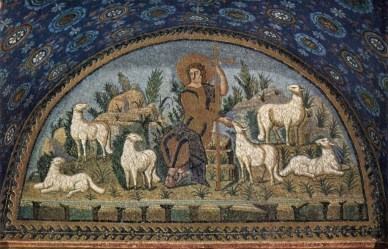
The classic translation of the name that God provides Moses is “I am who I am.” Some scholars suggest that this translation relies too heavily on Greek thinking which tended more toward the philosophical and abstract.  A translation that would lean more toward the Hebraic way of thinking which is more concrete and dynamic in its understanding of being is “I am the one who I am there.”  In this understanding, the revelation of the name of God is immediately connected with his covenant to the people of Israel.  God is not removed, God is revealed as a God who is in the midst of his people.  God’s very being is a “being-for-His-people.”

In the first letter of John we are given the singularly important teaching that “God is love”. This is first and foremost but the way by which we know God as love is the way of mercy.  Mercy is God’s love poured out, given that we might have life.  When we were lost, when we had sinned and wandered far from God, God sought us out.  God sought out Abram and made a covenant with him and his descendants.  God hears the cry of his people in Egypt and he seeks them out.  God enters into their suffering.  God is “I am the one who I am there.”

The fullest revelation of who God is; is our Lord and Savior Jesus Christ. Christ fully reveals both the love and the mercy of God and Christ is that full revelation of the name of God.  In Christ, God fully enters into the thorns of our suffering.  God is revealed in the very midst of our pain, our loss and our weakness.  I am the one who I am there.

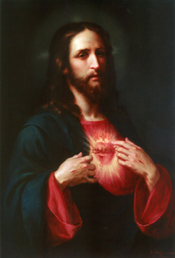
But we on our part need to make a choice. This is part of the gospel message for today (Lk. 13:1-9).  Through the incarnation God has entered into his creation and its injustices and tragedies.  I am who I am there.  Christ acknowledges the unjust killing of the Galileans by Pilate as well as the tragic death of those people killed when the tower collapsed.  We each have only so many days allotted us, what choice are we going to make?  CSacred-heart-of-jesus-ibarraranhrist comes to reveal the truth of who God is and to call us into relationship with Him because here and only here is where we will find true life.  What choice will we make?  We each have only so many days allotted us.
The midrash teaches that God revealed himself to Moses in the midst of a thorn bush. Isn’t it interesting that when Jesus, who is God with us and for us, is being scourged he is crowned with a crown of thorns?  In a couple of weeks we will hold the Enthronement of the Sacred Heart Mission here at St. Dominic Church.  The image at the center of the mission is the Sacred Heart of our Lord – a heart both divine and human and a heart surrounded by a crown of thorns beating in love and mercy for us.

The Transfiguration of our Lord: Extraordinary and Ordinary

Tags

, , , ,

transfiguration of Jesus1

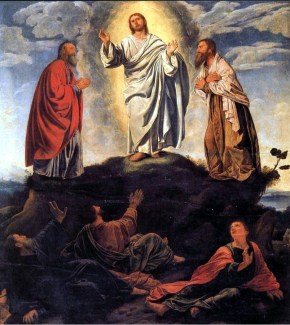
The Transfiguration of our Lord by Giovanni Girolamo Savoldo

We can say that Lent is an extraordinary time lived in an ordinary season. We fast, we pray, we do works of charity – all while we also go about the ordinary rhythm of our lives.  We still go to work, we still go to school, we visit with one another, we pay bills…  The ordinary rhythm of life continues on even while we make the extraordinary journey of Lent.

We have echoes of this “extraordinary in the ordinary” in our readings for this second Sunday of Lent. In the gospel (Lk. 9:28b-36) our Lord takes Peter, James and John up on the mountain to pray.  The three disciples experience the transfiguration of our Lord as he is in prayer to the Father.  They catch a glimpse of the truth of who Christ is and they are awestruck … but the world continues on.  The other nine disciples were probably about the duties of an ordinary day, for the people in the closest village it was just another day like any other.  The world did not stop even as this amazing event occurs.  Peter, understandably, wants to remain in this extraordinary experience but the gospel goes on to say that he “did not know what he was saying.” Our God does not disdain the ordinary.  For God the extraordinary and the ordinary are not opposed.

Just as Jesus took the three disciples up the mountain to pray, we are told that God “took Abram outside” to see and count the number of the stars (Gen. 15:5-12,17-18).  Our God values our company.  He does not like to walk alone.  Even with the surreal and mystical image of animals being sacrificed and Abram in a trance, God binds himself to an ordinary group of people, Abram’s descendants, in order to walk with them through the running of time and history and thereby bring them (and through them all of humanity) into the fullness of his Kingdom.  Christ himself values our ordinary company.  The gospels are consistent in this message.  Christ does not see himself as some tragic, solitary hero.  Christ binds himself to his ordinary, little group of followers even as he is fully aware of their weaknesses and their limits.

“Yes,” says the author of Philippians, “our citizenship is in heaven” and to this we direct our lives but we now live our lives here in this world so “stand firm in the Lord” (Phil. 3:17-4:1). Our actions here in our ordinary world and lives should reflect the extraordinary glory of our citizenship in heaven which is the hope we journey toward.

For God the extraordinary and the ordinary are not opposed. The same ought to be true for us.  We can be awakened, our eyes can be opened to see the extraordinary in the ordinary if we allow ourselves to be “taken up” by Christ.  Just as Christ took the three disciples up the mountain to pray, just as God took Abram outside to gaze at the heavens, we need to allow Christ to take us and pull us away from our own selfishness and draw us into his own life.  If we allow this to happen then we can participate in a greater reality, our eyes will be opened and we will begin to see as Christ sees.  We also can be transfigured.

It has been said that the transfiguration “means breaking boundaries. It means contemplating how good the Lord is, how wide his horizons are, and how deep the demands of his Gospel are.”  May each one of us be a little more transfigured during this extraordinary time lived in an ordinary season.

The witness of Eli: Mentoring Young People

Tags

, , , , ,

hannah taking samuel to eli  222On January 31st, the Church will celebrate the Feast of St. John Bosco – a man who devoted his life to helping young people.  One of the greatest blessings of our Christian faith is the witness of men and women throughout history who let go of their own needs and worked tirelessly for the good of youth and those generations who were to come after them. The witness of these men and women should call us, as the Church, into a reflection on how best to minister to youth and young adults, especially in a time and culture that is “youth obsessed”.  We can readily see how this obsession plays itself out in all areas of society – the entertainment and news media industry, politics, sports, education, relationships – just to name a few.  A fair question is how might this “obsession with youth” bleed into and perhaps even negatively influence the Church’s own ministry to youth and young adults just as they are seeking to claim their own Christian faith and discipleship and how might we best avoid the danger of this obsession?

For full disclosure, I will begin by stating that one of the core convictions I gained in my ministry with youth and young adults is that young people do not benefit from older people trying to act or pretend young; rather young people benefit when their elders remember their own age and are authentic to who they, themselves, are.

To use an image from Scripture: in our world today, young Samuels need the guidance of older and wiser Elis.  For any person ministering to young people, 1 Samuel 2-3 is an important and essential point of reference.  There is much insight to be gained in continually returning to these chapters. Eli is one of the unsung heroes of Scripture.  For our purposes here, we will make use of the famous encounter between the young Samuel and the elder Eli as a way to explore some thoughts.

In the second chapter of 1 Samuel we are told that the Lord had withdrawn his favor from the house of the priest Eli due to the corrupt actions of his two sons, Hophni and Phinehas.  Yet the young Samuel “continued to grow both in stature and favor with the Lord and with men.” (1 Samuel 2:26)  In the third chapter we find the well-known scene of the young Samuel hearing the voice of the Lord, mistaking it for the voice of the old priest and going each time to the sleeping Eli until finally Eli catches on to what is happening and instructs the young man in how to respond.

Our focus here is more on Eli than Samuel.  There are four things that Eli does and personifies which are worthy of reflection and emulation.

  1. Eli has a relationship with the young Samuel while not pretending to be Samuel’s peer.
  2. Eli was a man of prayer who was able to eventually recognize what was occurring and then give good instruction to the young man.
  3. Eli put what was in Samuel’s best interest before his own.
  4. Eli trusted in God.

The fact that the young Samuel is comfortable in seeking out the elder Eli each time he hears the voice of the Lord testifies to an established relationship of trust between the two persons yet nowhere is there expressed any confusion between their differing roles.  Eli knows who he is and therefore he is comfortable in his own skin and he has no need to pretend to be something that he is not.  An approach to Christian faith and ministry that needs to abandon itself and our Christian heritage in order to chase after the world in the hopes of relevancy lacks maturity and therefore any real depth of insight to offer a young person who is searching.  It might be flashy in the moment but beyond that there is just really not that much there.

What enabled Eli to be comfortable in his own skin and act out of his own authenticity was that he was a man of prayer.  Like any true discipline, the fruit of prayer is only born after the establishment of a hard-fought for habit and practice.  Let’s be honest, the discipline of prayer is not easy. That which enabled Eli to finally recognize what was occurring with the young Samuel was a lifetime spent devoted to the often daily and mundane work of prayer.  An approach to Christian faith and prayer which seeks to manufacture “spiritual highs” at all times rather than developing the daily discipline of prayer is more about feeding addiction than honest Christian spirituality.  Such an approach is in fact a disservice.  The life of Christian faith grows gradually, often unnoticed and through daily habit.

Not only did Eli know what the Lord’s call meant for the young Samuel; he also knew what it meant for him and his family.  Frankly, God’s calling of Samuel meant the end of the road for Eli and his own sons.  It would not be out of place to believe that this recognition must have crossed Eli’s mind along with the temptation to intentionally misguide the youth in an attempt to watch out for his own sons.  Yet, Eli did no such thing.  Eli put Samuel’s best interest before his own and even that of his sons.  This will forever be in Eli’s favor.  To let go of self for the good of another person takes a mature and wise heart. Wisdom is sorely lacking in our world today and one way that this can sadly be seen is when members of an older generation cannot let go of their own interests, needs and particular viewpoints in deference to what is in the best interest of the younger generation.  When we let go of our own needs to help those who come after us then we make a choice for hope and a choice for the future.

I believe that one of the many contributing factors behind younger generations no longer defining themselves as religious is their own experience of their elders’ inability to put the needs of others before their own – the “elders” in this context being a generation of people who would more readily define themselves as “religious”.  When young people no longer define themselves as religious are they forsaking religion per se or are they reacting against impoverished examples of religion which they have seen?  True maturity is found in not always needing to put oneself first. True maturity is expressed in seeking the good of the other person.  It is this type of maturity that truly aids the next generation, as shown in this encounter between the elder Eli and the young Samuel.

What enables this letting go is a profound trust in God.  Eli had such a trust.  Following upon God’s revelation to Samuel; Eli requests that the young Samuel inform him of all that had been spoken by the Lord, holding nothing back.  Samuel shares all, including the ending of Eli’s house.  Eli responds, “It is the Lord, let him do what seems good to him.” (1 Samuel 3:18)  Eli’s trust in the Lord was perhaps one of his greatest gifts to the young Samuel.  A faith obsessed with pursuing youth and relevancy lacks this depth of trust because it is a depth that can only be achieved by negation and passing through the dark night of the senses.  At this point, everything Eli had been about was negated yet he is able to offer this profound statement of trust in the Lord.  In the end, the most important thing is that God’s will be done.

It does the Church no good to chase after the world.  Yes, we live in the world and there are truly positive things to be gained and we must seek to encounter and dialogue with the times we find ourselves in but it does no good if we are co-opted and lose our own soul in the process.  Eli has much to teach us about helping younger generations find and know God while, at the same time, remaining authentic to who we ourselves are.